
Links
Transcript
HOST: ALICE CHENG
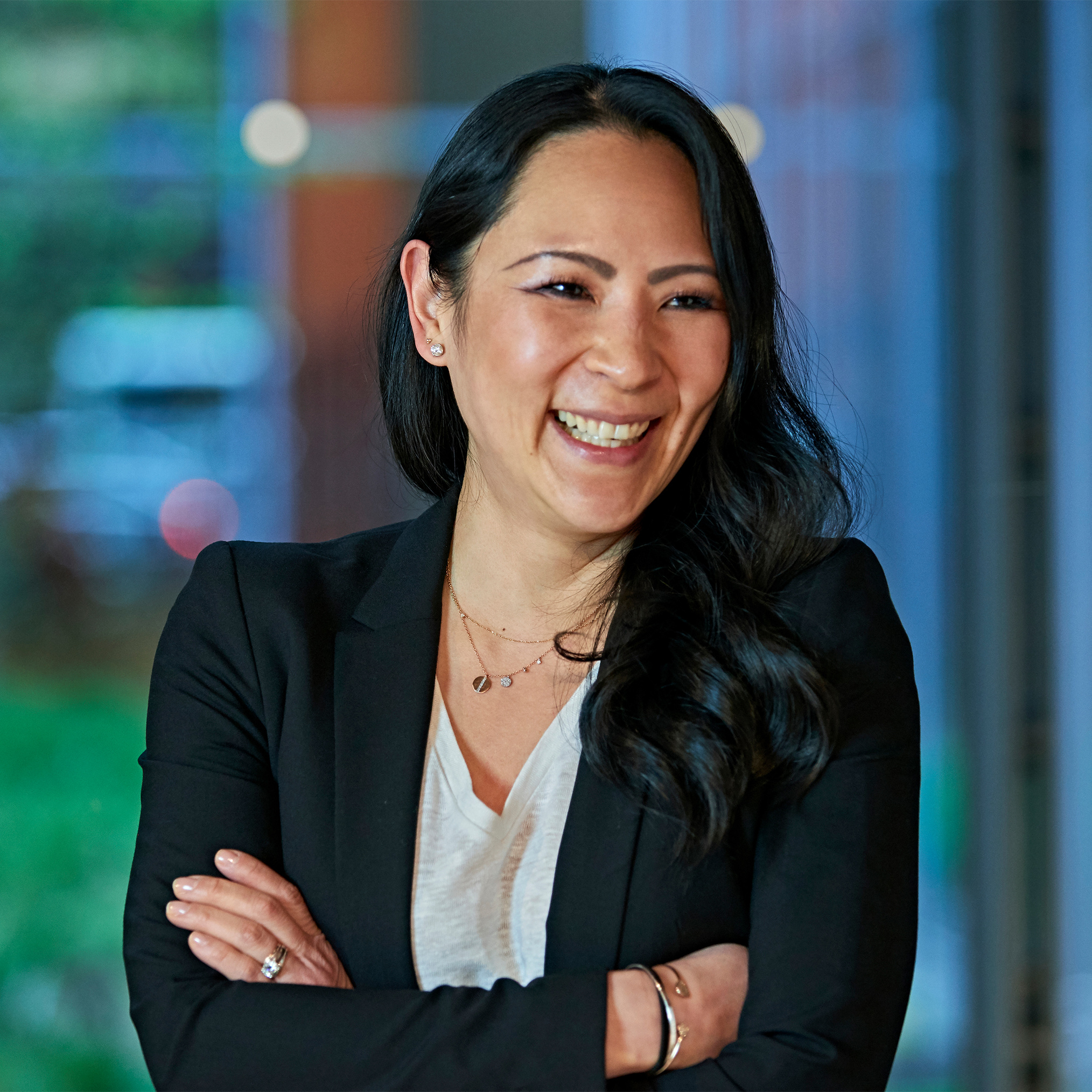
Welcome to Hospitality On The Rise, the podcast about the people shaping the hospitality industry and their journeys. I'm your host, Alice Cheng, Founder and CEO of Culinary Agents, hospitality's go-to hiring platform. And I'm here to give you your dose of virtual mentorship.
Here, we'll be sharing the stories, lessons learned, and advice from hospitality leaders who've carved out their own path to success. After all, this industry is where many get their start and go on to do incredible things.
Whether you're a pro, starting out, or just love the hustle, this podcast highlights what makes hospitality extraordinary, the people.
HOST: ALICE CHENG
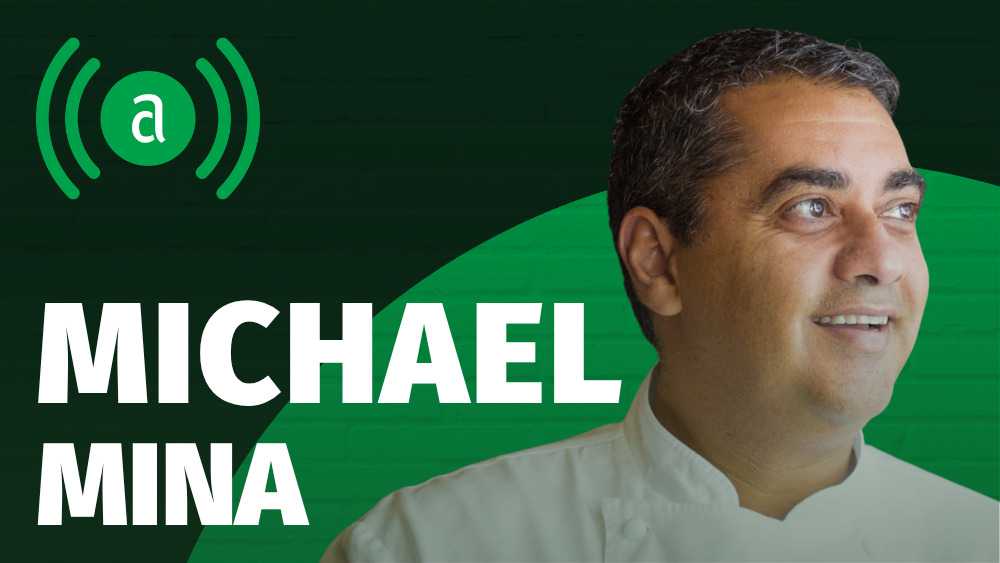
I'm so excited to have Chef Michael Mina here with us today. Michael is the Chef and Founder of The MINA Group, which is a super–for those of you, I'm sure, if you don't know, but you should–has close to twenty restaurants within the group in various forms. So we would love to hear about the evolution of the group and of Chef Michael's career. Thank you so much for joining us today.
GUEST: MICHAEL MINA
Thank you, Alice. Thank you for having me.
HOST: ALICE CHENG
Yeah, and I was reminiscing a little bit because I was thinking back to the last time I saw you in person among the, I would say, event circuit. I don't even know how you all keep up with all the events and the people, et cetera. But I want to roll back because you've had such an incredible career so far, and maybe you're just getting started...
GUEST: MICHAEL MINA
No. Please don't say that.
HOST: ALICE CHENG
Let's roll it back, and can you share a little bit about how you got into the hospitality industry?
GUEST: MICHAEL MINA
Absolutely. You know, I would say similar to a lot of chefs, it starts out as a job and usually as a dishwasher, that's what I did. And [it] was just a small little cafe in my hometown that I started working in the center of Washington state. And I was probably fourteen, fifteen, and it started out as a dishwashing job and then helping prep cook, and before you know it, you're kind of working the grill and you're helping cook. And immediately I think that there's, you know, hospitality is a wonderful industry because it kind of separates, kind of draws a line. Like people are either addicted to hospitality and love it, or it's something that… it's not the job that you want to have unless you actually love it. And I knew I loved it from day one.
HOST: ALICE CHENG
Yeah, yeah. It's not for everyone, but there is something for everyone in hospitality.
GUEST: MICHAEL MINA
There really is. Yeah. Absolutely.
HOST: ALICE CHENG
So when you were starting out early days and getting into the different positions, were you thinking, “Wow, one day I'm gonna open my own restaurant and have this big group”?
GUEST: MICHAEL MINA
No, I honestly the town I grew up in was very small, and this was before people were watching Food Network and everything else. I mean, my biggest challenge was figuring out if I want to be in this industry and I want to be a chef, what is the actual steps of just even getting there, right? And so just kind of understanding the schools–that there are culinary schools or things of that nature–what are the steps to becoming a cook or a chef in this industry. And then the big challenge was explaining that to my parents that that's what I wanted to do and not go to college.
And so that was what I was really focused on at the beginning, wasn't to have multiple restaurants. But obviously, I wanted to become a chef. I wouldn't have got into it… I would have, you know, when I made that decision that this is what I wanted to do, I wanted to become a chef. I didn't have any comprehension or idea of what does multiple restaurants look like.
HOST: ALICE CHENG
Yeah. Can you think back early on in your career of a lessons-learned that you had, maybe a mistake that you learned really quickly that you'll never make again?
GUEST: MICHAEL MINA
I can always point back to the worst service of my life. I think it was Valentine's Day, 1992. It was at Aqua, and we didn't count very well back then. We forgot to count, we didn't count as well as we should have for a set menu, if it was one of our first early days set menus, and we were kinda in the middle of everything, in the very middle of it, running out of everything. So I learned really quickly that you had to have extreme precision.
HOST: ALICE CHENG
You also learned that you don't want to go to a restaurant on Valentine's Day. No.
So let's talk a little bit about, because you built a lot of your, I would say, early kind of your own restaurants in the San Francisco Bay Area or in San Francisco. And San Francisco, every city has its unique challenges in general, and I think San Francisco is no different.
When can you think back when you were starting Aqua–that was your first standalone restaurant?
GUEST: MICHAEL MINA
Yeah, yes, yes.
HOST: ALICE CHENG
What was something–'cause you were working for somebody else before you went and opened that one. Can you think of something that was very different from going from working for someone else into kind of working for yourself or for different people?
GUEST: MICHAEL MINA
Yeah, I mean I think the thing that really gets you is–especially when you're young, and I did it when I was very young and I was obviously blessed to have an amazing team around me. But when you're young, you feel like you have to have the answer to every question. And I think that's one of the biggest mistakes because it puts an enormous amount of pressure on you, which when you're young, it's hard to handle the pressure the right way.
And so I think that was probably the biggest learning, was how do you divide up the responsibility and really do it in the right way? And it took a while, it takes time to get there. And nowadays I think there's much better roadmaps than there were back in the early nineties. And I think that that's helping the industry tremendously. But the reality of it is one and one makes three. And that's the absolute truth, right, is that challenge of everything coming at you so fast and at one time and the level of the expectations, of what should be expected when somebody goes to a restaurant like that, you should have very high expectations. You're only going to accomplish that as a team. And your job is to help to put together really good processes and help to be the leader, yes, but you're not going to solve everything. You've got to really work together to solve everything.
HOST: ALICE CHENG
Yeah, and after you opened your first one, what kind of triggered, when did you feel confident enough that like, “Okay, I can open another one or another one and another one?”
GUEST: MICHAEL MINA
Honestly it really was centered around the fact that the team stayed together for so many years in the kitchen. And what I saw as the future of our industry at that time… a lot of what you would see when chefs would open multiple restaurants, at that point the media was a little different about, well, why is the chef opening another restaurant? But you would have quote unquote “restaurateurs” doing it, and some of them were great, and some of them were not really restaurateurs, they were just kind of utilizing the chef in multiple places and things like that.
And it really felt like, okay, if we're gonna continue to move forward, chefs also have to become, you know, it would be nice if the chefs were the restaurateurs as well, because they do have the passion for it. And then you look around you, and you have so much talent that it's sitting in one spot, and you think to yourself, “Okay, I think we're ready for a second one so they can grow into–so that everyone can grow.” And the second one that we had the opportunity to do was Bellagio, which was great for me because we got to experience what it was like to be in that hotel model versus just the freestanding restaurant model.
HOST: ALICE CHENG
Yeah, and looking back–and I encourage everyone and anyone who's listening or watching to Google Chef Mina and his storied career because we're just hitting the highlights here.
When you were growing, you had multiple restaurants in San Francisco proper and then you expanded all over the place. Can you talk a little bit about that process or that strategy?
GUEST: MICHAEL MINA
Absolutely. Absolutely. Well San Francisco, you couldn't ask for a better platform, honestly. I mean, every market has its challenges, but to have the product that you have here, to have the type of employees that you had here that had worked in great restaurants, and when you opened and start with that foundation, and then to have a clientele that was food savvy. And now it's great, in the United States now, you can open anywhere and people obsess over food, which is great. It's exactly what we all hoped would happen in our country, right? And we want to see it happening.
But at that time, San Francisco was, like, you couldn't out-create your guests. You could be as creative as you wanted to, and if you could tell them the story behind it, the creativity, and if you could tell the story the right way and your staff totally did it for us, right? You could really push the envelope. You could do dishes that really did push the envelope and use the whole globe. And I think that was part of the allure with San Francisco and then obviously such a beautiful city, and then to be able to do multiple restaurants here in San Francisco was wonderful because it's nice to start in your home base where you can get to the restaurants.
And then you put together–to expand you gotta be very strategic about your strategy, right? Because you have to have a strategy, and mine when I left Aqua and started MINA Group, the strategy at that point was an expansion model, but the whole strategy we put together was partner with hotels via management company. Don't do a lot of owned and leased restaurants. Put the money that we would put into a brick and mortar that we own versus that were partnership with a hotel, put that money into the infrastructure of MINA Group and then put together kind of the strategy of people that you want to partner with and the hotels that you want to open in, and then also who who comes to you, right? Because you're fielding inquiries of people that want you to open, as well as you're looking at markets and you're looking at hotels that you would like to open in.
And so we ended up doing that, which was partnerships with hotels and taking kind of that, I like to call it as “the luxury of collaboration,” right? And what I mean luxury, whether it's the hotel's luxurious, but you have that luxury of collaborating with a hotel, and you create this kind of partnership with them, and you're getting to do what you're best at, which is usually concept, design, and operations.
HOST: ALICE CHENG
Yeah. That's so smart. And I'm gonna hone in on a couple of things you said because when we're talking to, whether it's talent who have goals to open their own restaurants and have their own group one day, or it's operators who are in a growth mode and trying to figure out what direction and how and where to grow, it's so smart to hear how when you were starting out, you were like, “This is our strategy, this is our north star, this is what we want to do,” and then build from there.
And it’s fine if things evolve and things happen along the way. But it's challenging sometimes when you're in the excitement of “let's just do stuff,” and then you reach a point where you're like, “wait a second.” And if you do things right in the beginning, all of a sudden you have all these opportunities coming to you. And if you don't have a strategy in place or if you don't have some sort of vision, it makes it difficult to kind of focus, right?
GUEST: MICHAEL MINA
Yeah, it makes it difficult to focus–and I'm not saying we've done everything right 'cause we haven't–but the reality is it makes it…
HOST: ALICE CHENG
But you had a plan.
GUEST: MICHAEL MINA
Yeah. It makes it really hard to get to kinda get the best out of everybody because, even though in our industry there's always gonna be a million moving pieces every day–it doesn't matter whether you have one restaurant or you have forty restaurants, there's gonna be a million moving pieces, and there's gonna be decisions to be made every day. And so the more you go into it with a strategy, with a system and a structure and that's gonna always… And I think that the other thing that you have to do is you have to understand that that's gonna evolve. You know? And I think sometimes people don't want it to evolve. They want “so this is how we've always done it” type of thing. And that's not reality 'cause the world isn't what it always was each morning, you know? Every morning it's a new world, it seems like.
HOST: ALICE CHENG
Yeah. Well, especially when you've been in it at the level that you've been in it for so long, right? And I think back to, you know, I lived in San Francisco for five years or so when I was in my previous life. I worked at IBM for thirteen years, and I was doing the Silicon Valley route, and I lived in San Francisco. So I frequented your restaurants, and I remember RN74 was one of my favorite places to go chill, amazing wine list, fun, beautiful light.
But I then, also years later, went back and enjoyed an incredible meal when it was International Smoke, right? So to be able to kind of continue to evolve and not only take spaces but create experiences the way that you have is no easy feat. And you talk about partnerships, you've also successfully had–just from the outside looking in–really great partnerships with different types of folks for different markets for different concepts, et cetera. Can you talk a little bit about how those–I mean, some probably inbound, some maybe outbound?
GUEST: MICHAEL MINA
Yeah, honestly it is one hundred percent what MINA Group is all about and what we want it to continue to be about more than ever. And now the beauty is… now partnerships are a lot of them are actually just come from within the company now because there's so many talented people that have ideas and things they want to do, and we can partner together with people within the company.
But whether it's a partnership that's in the media or it's a partnership kind of behind the curtain a little bit, there's so many partnerships that everything we do, we're always looking at who's gonna be the driving force, how are we gonna do it? And I would say that one of the best examples was PABU because PABU here in San Francisco–you know, very unfortunately Ken Tominaga did pass away, but my partner there, that was PABU. I mean, he had a restaurant in Rohnert Park, and it was called Hana, and you go in and it's in a strip mall and all the chefs are eating there. And he was the most delightful human being and just great at his craft and just, you know, we're not gonna–I'm not. Other people maybe could, I would not say that I could go open a Japanese restaurant and bring the right culture to it, especially back then, without the education, without the spirit and everything else. It was like Ken started Red Pant Fridays where he had all the employees wear red pants, and it was just so adorable. Like, you walk in and he's got his red pants on.
And it was just…. to see that level of what passion, everything, that's when you started saying partnerships are so much the way to go because we do have something really special in what we've built where you can collaborate and have partnerships and be able to let the partners do something that maybe they would never have a chance to do. Or it would just give them a better chance of being successful as well, as well as giving us a better chance of being successful. And that's what a partnership's all about, is bringing both… everyone bring something to the table to make that success.
RN74, a perfect example. That wasn't me, that was Raj Parr. That was all about somebody that had brought so much to MINA Group in the wine world. And then we got to partner with, at the beginning, it was with Jason Berthold, who was an amazing chef that had worked for Thomas Keller for many years. And I kind of put the pieces of puzzle together, you know? And the puzzle was just beautiful when it was all put together because Jason was really passionate about wine and was a winemaker himself, and him and Raj, they were the real driving force behind it. But The MINA Group helped put the pieces of the puzzle together.
HOST: ALICE CHENG
Yeah. I love that as you're talking and you think about, like, yeah, the group has your name on it, but you're like the conductor that's putting together the pieces of the orchestra.
GUEST: MICHAEL MINA
Hundred percent. Yeah.
HOST: ALICE CHENG
And you know, I think, you know, that I think when you started it, it was probably a different approach. You pioneered a lot of that type of collaboration, right? As the industry evolved, businesses had to figure out how do we also continue to evolve as well?
GUEST: MICHAEL MINA
Yeah. I think, I hope that we did, but at the end of the day, it's what we continue to do. And so now it's just how do you get better at it? I don't look at it as much of what we did. I'm looking at it now as, like, we've done it for a long time, so how do we keep getting better at it? Now that we know that this is one hundred percent our lane, and especially me now, that's by far the funnest part of the job. Yeah, without a doubt. It's sitting together with, whether it's the culinary team, whether it's the front of house team, everybody together, the marketing team folks, just everyone together and looking at it and saying, okay, how do we put all this together and then how do we continue to make it special?
HOST: ALICE CHENG
Yeah, you make it sound so easy. For someone whose hope is to kind of get to the level where they can kind of enjoy what you just said–because it takes a lot of hard work and oftentimes time to get there–can you give them a piece of advice around something to really focus on or a non-negotiable as they're picking partners or growing via collaborations?
GUEST: MICHAEL MINA
Yeah, don't limit yourself to what you think is your destination. Don't limit yourself to it. What I mean by that is I couldn't tell you how many chefs told me they never open more than one restaurant, and big name chefs. And now you see them with multiple restaurants, right? And I think that that's one of the things that you don't want to limit yourself to because you don't know. And I can tell you going backwards is a lot easier, right? If you understand the business and the structure of putting it together of how you would open more than one restaurant and/or open one restaurant, maybe going from being a chef to opening a restaurant, that's the big aha moment, right? That's the big step. And you do want to do this in steps. You're not gonna go from being a prep cook to opening 12 restaurants in one year, right? So you do want to do it in steps, but don't limit the ceiling. Look at the ceiling and say, okay, because if you learn how to do more, you can apply it to the one you have.
HOST: ALICE CHENG
Yeah.
GUEST: MICHAEL MINA
It's harder to go that way.
HOST: ALICE CHENG
Exactly. And we're summarizing decades of work here in thirty minutes, right? As far as your career and what you've done.
GUEST: MICHAEL MINA
Yeah, and it's the systems. Honestly, you're gonna create your systems, and I think one of the harder things that restaurants do is you want to do something that's so laser focused, right? But to create something that's sustainable, it has to be for when the restaurant is the busiest it's gonna be, right? And so if a system works Sunday through Thursday, but it doesn't work on Friday, Saturday 'cause the restaurant's much busier, then that's not a sustainable system, right? It's got to be able to sustain on the busiest nights and to be able to perform in the same way and be consistent.
HOST: ALICE CHENG
Yeah. And I don't want to gloss over, I'm gonna rattle off some of this stuff that may or may not make you feel uncomfortable because I'm gonna brag about you a little bit. Rising Star Chef of the Year JBFA Winner, JBFA Winner: Best Chef California, Bon Appétit Chef of the Year. You've got Food Arts’ Silver Spoon Award, Wine Enthusiast Restaurateur of the Year, and JBFA Who's Who of Food and Beverage in America, Robb Report: one of the 50 Most Powerful People in American Fine Dining. I mean, this is just some accolades that you've gotten over the years, and you're also an author with multiple cookbooks. Congratulations.
GUEST: MICHAEL MINA
Thank you, thank you.
HOST: ALICE CHENG
And modest. As you're continuing to grow and as you've built many teams, obviously you've worked with a lot of different leaders, for those who are stepping into leadership or who want to get into leadership, can you think of, like, what do you look for? What stands out to you, whether it's back of house or front of house or whatever?
GUEST: MICHAEL MINA
Well, it's the stepping stones, honestly. And so to lead, you gotta lead, right? And so people either are comfortable and enjoy leading or they have to get themselves comfortable to it. And obviously what you want to do is you wanna be able to say, “Okay, well who am I really gonna be leading?” Well, you're always gonna be leading kind of one–you know, because it is a brigade, and you're gonna lead one step underneath you, right? And so you're gonna look at it and say, “Okay, my first manager job in the front of house is probably gonna be the assistant manager or some sort of entry-level manager,” right? “And so who will I be leading?” And so you look at it and you might say, “Okay, it's this group, it's the bussers, it's the back servers, it's this, it's that.” And then you have to really understand that strategy for leading those people, right?
And then always looking forward. So you're leading the people under you, but you're always looking forward about how you're being led. And what would you do different and what are you getting out of it, right? If you're if you think you would do everything different, then you're probably not in the right place. If you think you're gonna do nothing different, then you're probably not gonna get to the next level, right?
And so what you want to do is you want to look at it and think about what–because it's not what you would do different because somebody is doing something wrong. It could be what are you gonna do different because you're looking ahead. What is the world gonna look like a month from now or six months from now or six years from now? And you're strategizing kind of what would I want the perfect scenario to be if I was in charge, right? Yeah, you have to look at that. Yeah, and it'll help you because don't look at it in a way where you don't know all the intricacies of why it's being led that way, right? Because sometimes there are intricacies you don't know. But what it'll do is it forces you to start to answer those questions as you build your leadership style.
HOST: ALICE CHENG
Yeah, and what I was gonna add to that is now more than ever, hospitality is always–we talked about in the beginning–it's not for everyone, but there's something for everyone. And now more than ever, especially as the industry has evolved, it's a place where you can build a career in many different directions and have a very fulfilling, successful one, right?
And I can't say that twenty years ago that was something that was top of mind, people like, “I love this industry and I'm gonna stay and build this nice, fruitful career.” But over the years between leaders such as yourself that have kind of forged their own path and given people inspiration and examples of how to do it and also advice, to your point, is where people are looking to work and the influences that they get where they work, that also kind of shapes people's leadership styles, your preferences, and then has them build their own style. So I love that.
I would say, a little bit about yourself, how do you have so many–what is it, 18 locations? I mean, I can't, I lost count. Twenty…?
GUEST: MICHAEL MINA
No, we have a lot more. We have eighteen concepts. We've got thirty-eight locations then.
HOST: ALICE CHENG
Thirty. Okay, thirty-eight locations. Wow. How do you keep yourself balanced and inspired?
GUEST: MICHAEL MINA
Well, I mean, inspired is very different than balanced. Inspired, I'm inspired every day. I mean, I think so many people in this industry have a little ADHD or are very, when we're focused, we're laser focused. And so I'm inspired every day. I mean, and it really is because a lot of this as well is, it's exciting. I mean, there's people that live to eat, there's people that eat to live, right? And so I live to eat, and I've always–you can tell–and I've always enjoyed it. And so it's something that you're constantly thinking about, right?
And what's so inspiring is just seeing this movement now, like you see food in the United States is just exploding, right? And everywhere you go, you can go to any city now, and there's great restaurants and great chefs and great restaurateurs, and the whole globe is being represented, which is so amazing. It's just amazing to see. So all that's gonna keep you inspired, and it's always new and different and moving forward.
I think balancing is the piece of it that you kind of always have to balance, is like, okay, how am I going to keep... how do I keep moving forward to keep being able to partner and work with talented people? Because otherwise the balance gets really hard. If you're not working with talented people, the balance part gets really, really hard. And so the more talent–the more you invest in the systems to either work with talented people and train people to become more talented, the better your work-life balance is gonna be.
HOST: ALICE CHENG
Yeah, I love that. So what's next for you? What's on the docket that you can share?
GUEST: MICHAEL MINA
Continuing. I mean we're gonna continue. We're doing more full food and beverage partnerships with hotels where we run the whole food and beverage and that's gonna create more partnerships within MINA Group. So we'll continue to look at a full hotel and say, “How do we do a really cool cafe? How do we do a great bar? How do we do a great restaurant? How do we do maybe multiple? How do we do really cool events?” You know, events, I think, are an area that in hotels that we are really passionate about right now, looking at how do you create experiential events? And so we continue to do that and continue to build our team.
And right now, we've had a really nice, like, everything kind of go through phases and some transition, but so some of the younger folks have moved up into corporate roles, and it's been really fun to watch them now bring a new life and new energy and new ideas to the table. And that's kind of the future for us.
HOST: ALICE CHENG
Yeah, I love it. I love it. On that note, we're gonna go to quickfire. What advice would you tell your younger self?
GUEST: MICHAEL MINA
Slow down to speed up.
HOST: ALICE CHENG
What's your advice for someone struggling in the industry?
GUEST: MICHAEL MINA
Make sure that the passion is there, and sometimes you need a change of environment, but it really does come down to your passion, and you have to really want it. And if it's the environment that's keeping you from doing that, then be serious about looking at–don't just give up on the industry, maybe change your environment.
HOST: ALICE CHENG
What's your advice for fellow hospitality leaders?
GUEST: MICHAEL MINA
Continue to look at the… I think that a lot of people get in the trap of saying, “It's not like when we were growing up” when people aren't available. It's just changed. There's a lot of good in it. People are learning at a quicker rate because of everything that's out there. And let's not put people into one box.
HOST: ALICE CHENG
I love that. On that note, thank you so much, Chef Michael, for spending time with us, sharing your advice and a little bit about your career path. And personally, thank you for all the amazing experiences I'd have in your restaurants.
GUEST: MICHAEL MINA
Thank you.
HOST: ALICE CHENG
And look forward to seeing you soon.
GUEST: MICHAEL MINA
Absolutely. Take care.
HOST: ALICE CHENG
Remember, success looks different for everyone in hospitality. No two paths are the same. If you have a leader or a topic you want to hear about, email [email protected].
Hospitality On The Rise is brought to you by Culinary Agents, connecting top talent with employers since 2012. Whether you’re hiring or looking for your next opportunity, join us at CulinaryAgents.com
For more inspiration, subscribe to Hospitality On The Rise and visit HospitalityCareerPaths.com, a free platform by Culinary Agents.
Thanks for tuning in! Remember to like, follow, and subscribe. And if you loved this episode, share it with someone who could use a little inspiration.


