
Links
- King (Instagram)
- King (Website)
- Jupiter (Instagram)
- Jupiter (Website)
- Dean's (Instagram)
- Dean's (Website)
- Lei (Instagram)
- Lei (Website)
Transcript
HOST: ALICE CHENG
Welcome to Hospitality On The Rise, the podcast about the people shaping the hospitality industry and their journeys. I'm your host, Alice Cheng, Founder and CEO of Culinary Agents, hospitality's go-to hiring platform. And I'm here to give you your dose of virtual mentorship.
Here, we'll be sharing the stories, lessons learned, and advice from hospitality leaders who've carved out their own path to success. After all, this industry is where many get their start and go on to do incredible things.
Whether you're a pro, starting out, or just love the hustle, this podcast highlights what makes hospitality extraordinary, the people.
HOST: ALICE CHENG
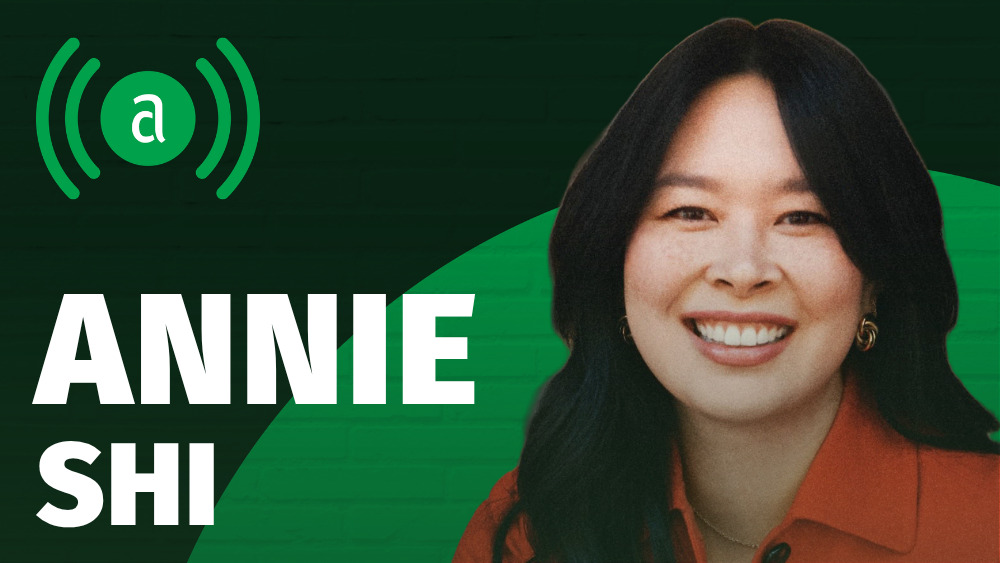
We're so excited to have Annie Shi here with us today. Annie is the Beverage Director and Co-Owner of King, Jupiter and Dean’s, and also the Owner of Lei, which is the 2026 JBFA Best New Restaurant, wine bar in Chinatown here in New York City. Thank you so much, Annie, for joining us today.
GUEST: ANNIE SHI
Thank you for having me. Really excited to be here.
HOST: ALICE CHENG
Yeah, I don't wanna gloss over the fact that you also have a cookbook and you have many other awards and recognitions that we're gonna kinda get into here. And you're also on the board of directors of Glancy Wine Education Foundation, right?
GUEST: ANNIE SHI
Yes.
HOST: ALICE CHENG
So, Annie, how did you get into the hospitality industry?
GUEST: ANNIE SHI
I think I came about it from a very unusual angle because I just loved food. I spent my entire childhood obsessively watching Food Network, like hours and hours and hours of Food Network every single day. My mom cooked dinner every night; food was just a constant thread in our family. We spent our weekends grocery shopping, and then I just grew up watching my mom and my grandmother cook a from-scratch meal every single day, and that was just part of growing up and our culture. And I always just loved it.
But being the child of immigrants, my dad's first job when he moved to the US was in a restaurant, it was in a takeout Chinese spot, so it was really just frowned upon. Like, I wasn't allowed to work in a restaurant like so many of my peers were. I was always in summer school. I was always told I had to get internships and white collar jobs. And so I got a job after college in finance, but my heart was always in restaurants, and I took a hospitality certificate course at NYU on the weekends while I was working at JP Morgan, and that was my way of just trying to figure out if this passion and hobby that I had for for hosting and for cooking and for restaurants, if that was legitimate and if that was something that I wanted to turn into my profession.
And so I did that one summer and I really enjoyed it, and then I got the chance to move to London with JP Morgan and I jumped at that opportunity. And then once I kinda settled in there, I cold-emailed, like, ten different restaurants in London, asking for a stage. And only one restaurant got back to me. It happened to be my top pick. It was The Clove Club.
HOST: ALICE CHENG
Great restaurant.
GUEST: ANNIE SHI
Yeah, incredible restaurant. And I responded immediately and then showed up the next day at the start of service and just tried to introduce myself to the hiring manager who happened to be their CDC, Tim Spedding. And I just kind of felt like if I could put a face to the name and I wasn't just a random email from a random stranger that I stood a better chance of them saying yes to me, and that is kind of what happened. He was like, “You're here, so sure. You're hired. Come in on the weekends and peel potatoes in our basement,” which is kind of what I did on the weekends for a pretty long time, for like three months.
I would work JP Morgan Monday to Friday and then do the Club Club Saturday, Sunday. And I was actually in the kitchen. That was the first part of my stage that I kind of came back and did a stint in their front of house for a couple of weeks. So yeah, that's kind of my first foray into restaurants and into hospitality.
HOST: ALICE CHENG
Wow. So when you were doing that, were you like, “Okay, this is like…” like, you kinda dipped your toe in, you did a little stuff here, and there and now you're actually in it. Were you feeling more confident that the switch was gonna happen?
GUEST: ANNIE SHI
I think so. I think all of those experiences were just kind of me trying to figure out how serious I was about this and if this was really a world that I wanted to be a part of. And at the same time, I met Clare and Jess who then became my partners, my chef partners in King. And so it kind of all fell into place a little bit, and so opening a restaurant seemed like… ‘Cause I was considering so many things. I was like, do I open a restaurant? Do I work in a restaurant? Do I go work for a corporate side of hospitality? Do I apply for a corporate job at USHG or Steven Starr or Momofuku?
HOST: ALICE CHENG
So many.
GUEST: ANNIE SHI
All of the big hospitality groups that were at the height of their influence in 2016, 2015, 2014. And when I met Clare and Jess, it just really felt kismet. And we did a couple of pop-ups in London, and we just all were like, “Yeah, let's all quit our jobs and move back to New York,” which is not something I would ever advise someone to do now. But I think meeting your business partner is like dating in real life. It's really difficult to say what is the right fit, and I'm someone who goes by gut instinct and compatibility on a very personal level. And so that's what compelled me to quit and move back to New York, and it has worked out for us.
HOST: ALICE CHENG
Yeah. Wow. This is real career changing stuff. You know, I think a couple of things. You clearly had some experience and you really pursued this feeling of “I wanna do it, I don't know if I want to do it, I don't know in what capacity. And then I don't know if I can,” right? Because the grass is always kind of greener, right?
GUEST: ANNIE SHI
Totally.
HOST: ALICE CHENG
And it sounded like you had a pretty good, at least job at the time, at least something stable enough to allow you to kind of think and explore and test some other things, which is also important. Like, what is your personal situation? Are you able to take risks, certain, and do you have the capacity to do it, right? But then to your point of meeting the right people at the right time, there is this little bit of–and everything's risky, but then there's so many different things that can happen in between starting your own restaurant, opening a business of any sorts, finding the right partners. And so when it clicks, it clicks. Congrats.
GUEST: ANNIE SHI
Yeah. Thank you.
HOST: ALICE CHENG
And I love that you all decided to just pick up and move back to New York and do it here as if it wasn't hard enough to open a restaurant. Let’s pick Manhattan, to do it as your first go.
GUEST: ANNIE SHI
I know. Well I grew up in New York, so it felt like home and it felt like the market that I actually had the best grasp of real estate and location, so.
HOST: ALICE CHENG
Yeah. So now I'm gonna get into the meat of it. What were some of the early kind of lessons learned when you're opening a restaurant?
GUEST: ANNIE SHI
I mean, oh my god, where do I even start? I don't think there's a magical way to start or the right way to start. We literally sat down and we Googled “restaurant business plan”, and that's the model we used for our deck. We made the decision not to take money from friends and family because we all felt like it could really strain business relations between us depending on how that shook out, and it was already so much pressure on us individually. And that just meant that we had a really, really hard time raising money because obviously none of us had ever done it before, and we were new, brand new to the market. And we are really indebted to our first round of investors who believed in us. We were not fully raised until, like, four months after we opened, so that was a little bit rough.
But I would say when you're opening your first, do as much as you can. Know when to go for professional services, but also know when to put in the graft. And opening a restaurant can be so expensive or it can be really bootstrapped, and that delta of cash is where you learn your experience and where you find your expertise and where you also can stand to make a little bit more money. Like, you're giving up less equity because you have to raise less. So I would really advise you have to go into it willing to project manage your own construction, and/or I did so much reading on DOB policies and how to get your permit for this and that license.
We used very few legal services. For liquor, we did go with Helbraun Levey, but a lot of getting signature pages from investors, compiling that, like, I did that 'cause I wasn't gonna pay a lawyer four hundred dollars an hour–and that's on the cheap end–to do all that stuff. So I think it's just save money where you can so that you can raise a little bit less and therefore hopefully retain a little bit more equity, and it's just less pressure to pay that stuff back.
HOST: ALICE CHENG
Yeah, yeah. We hear that pretty often too with leaders who kind of talk about either lessons learned or what they would do differently. And that's one of the common ones, is build outs are expensive, but wherever you can save here and there, especially if it's your first one. There's also kind of, I think, a novelty to it now in general, where it's like if you're scrappy and you just piece it together and put band aids on the walls, that’s also very comforting as well.
GUEST: ANNIE SHI
Yeah, I think in 2026, people wanna see, if you are a scrappy individual opening your first mom and pop shop, they don't expect, like, they almost wanna see that character, and it's okay to have exposed wires. It's okay not to have expensive artwork. That's part of the story, which I think is really refreshing and gives a little bit more leeway.
HOST: ALICE CHENG
Yeah. Well it seemed to have worked out for you all. You were featured in Vogue and then you were in New York Times 50 Best Restaurants for several years, along with other things. And I would say, when were you thinking about your second location?
GUEST: ANNIE SHI
I think when you have founder- or owner-led restaurants, especially because it was our first and we really didn't have any money and we had a hard time hiring, we were very much entrenched into the business in a way that then became very difficult to extract ourselves because you're not just replacing me. I'm one headcount, but now I've turned–that was very, very cheap because we weren't paying ourselves very much. But suddenly I've become two managers and potentially a somm and a host. So it took us a long time, and it took us a long time, and I don't regret it at all because I think it takes time for restaurants to find their identity and to feel really strong in their foundation.
What was difficult is I feel like by the time we were kind of ready to think about, “Okay, maybe we don't have to be there for twelve hours a day every single day,” is exactly when COVID happened. And that was four years in, four or five years into it, we were kind of hit with COVID, and it kind of restarted the clock, obviously, for us and for everybody else. Which is why we didn't really open our second restaurant until 2022, November 2022, with Jupiter. So that was seven years after we opened King. So timing was tough.
I will say that the other aspect of it is that, as a group, we've never known what our next step is. Even when we opened King, I remember talking to Jess and to Clare and saying, like, in New York, you kind of need to open more than one because otherwise you don't have the ability to never be at your own restaurant, and also things get a little bit easier with some scale.
But really the restaurants we admire the most were places like the River Cafe or Zuni or Chez Panisse, these kind of beautiful, jewel box, singular restaurants that never expanded. And I think we really grappled with whether or not we wanted to do more. So those are the two factors.
HOST: ALICE CHENG
Yeah, I mean there's no rush, right? And sometimes people are very focused on growing as quickly as possible. But I think those who really thoughtfully and take a step back, usually don't regret taking it slow, especially when you go from one to two. And you're right, we've actually seen, I think, three tends to be like the magic number. Like, once you open your third one, there's framework systems, maybe core leadership or something that's in place that helps you kind of scale a little quicker. I don't know if that holds true for you all because you're there.
And Jupiter was a different kind of restaurant in a different neighborhood. What were some of the challenges with kind of basically moving uptown, right? I love it, it's in my neighborhood, but whatever.
GUEST: ANNIE SHI
Yeah.
GUEST: ANNIE SHI
Well I think we were really enticed to Rockefeller Center for a couple of different reasons. One, it's just so iconic. Even as a little girl when we lived in Rego Park, Queens, we would always trek into the city on Christmas and take our photo in front of the tree, and it just plays a really pivotal role in my childhood memories around the holidays. And two, we had so many friends moving up there as well. Like our downtown neighbors, Ignacio at Altro, Riad and Lee from Frenchette, of course Ellia and JP. So when we heard and spoke to those friends, we're like, “Okay, this makes sense. We're all doing it together.”
And I think it's definitely a very different demographic. I think there's two use cases for Rockefeller Center. It's like you work there, you live close to there, you live uptown, and it's like a great middle point to meet your friends from Brooklyn or downtown. Or you're going to a show or going to a doctor's and you're in the area. But what I don't think it is is that it's not its own dining destination. You're not gonna come all the way to Brooklyn just to go only for a restaurant in midtown. Or it's very, very difficult. And that's partially because it's busy there. There are a lot of people, there are a lot of tourists. It's not always easy to get around.
And so we have… our business there looks very different. It's highly seasonal. We are slammed from the minute the tree goes up, end of November, through the minute, the moment it goes down, which is like mid-January. And then we have this other high season in the summertime because we have these tables and chairs. We have, like, 50 seats outside, on the rink, right underneath the Prometheus Fountain, which I think is just one of the most magical, iconic New York City dining moments. I love taking friends from out of town there for dinner or for lunch or a drink.
And then in between, we have some really slow moments, like January when a lot of people are not in the office, or August when a lot of people are not in the office. So it's difficult to manage a big restaurant that is highly seasonal. And then when you're busy, it feels like there's one million people descending on you. It definitely gives you a little bit of whiplash. But that is the, I think it's just running a big restaurant is almost like a different muscle. Very different.
HOST: ALICE CHENG
Yeah. It is a lot bigger than King.
GUEST: ANNIE SHI
Oh yeah, it's a lot. It's, like, three times as big.
HOST: ALICE CHENG
Right. Yeah. Three times, yeah. Well, congrats. That's also key to that, I'll kind of circle back to, is when you were taking–I'm sure when you were evaluating whether whether or not to do this, and you're looking at: you're in good company, the area was getting kind of a revamp, if you will.
GUEST: ANNIE SHI
Yeah, huge revamp.
HOST: ALICE CHENG
And that bet seems to have paid off as far as you're seeing a lot more restaurants, more I guess destination-like restaurants opening up in the Midtown East, like that type of area, largely due to some of the restaurants that you had mentioned, your restaurant, as well as other folks expanding into other areas. So you're kind of like a pioneer into that space, right?
GUEST: ANNIE SHI
Yeah.
HOST: ALICE CHENG
You never know. Sometimes risks are worth it, right?
GUEST: ANNIE SHI
Yeah, no totally. And going outside your comfort zone is worth it.
HOST: ALICE CHENG
Yeah. So amongst all this, you're growing your teams, you're busy, now you're going uptown and downtown–I guess it's not really uptown, but it's upper than King. How are you balancing yourself or figuring out how to manage? I'm sure you're getting pulled in all these different directions. Now you have more restaurants. What are some of your secrets?
GUEST: ANNIE SHI
I wish I had a secret. I really don't. I try to designate days for certain restaurants. It never almost never looks like that by the end of the week because there's always something that comes up that requires your attention, and so you're running from one to the other. The days when I hit all four restaurants are really not great days because it just means that I'm constantly commuting, which is not ideal and not an efficient use of my time.
But that's just what it is. Restaurants are such tactile–sometimes an in-person meeting will clear something up that like a phone call or an email just won't do. I will say that one thing that I do is I will take Ubers, and I will work throughout my entire Uber ride. And sometimes that is my only time to catch up on messages and to check email and to get back to people. And so I call it my mobile office.
HOST: ALICE CHENG
Yeah. That's a good one. Sometimes traffic isn't that bad, right? It gives you an extra couple of minutes.
GUEST: ANNIE SHI
But it's something that I'm constantly trying to work out. We are just kind of getting to a point where the restaurants are at steady state because I opened Lei last June. So Lei just celebrated one year.
HOST: ALICE CHENG
Yeah. Congrats.
GUEST: ANNIE SHI
Thank you. And then Dean's just hit, we're about to hit four months.
HOST: ALICE CHENG
Four months.
GUEST: ANNIE SHI
And so up until now, it's just been like we're just in opening phase, and an opening phase is a very different kind of mindset. For me, an opening phase is my attention is basically a hundred percent on the opening restaurant, and everything else becomes secondary because you have one chance to open in New York, and you have to get that positioning and the experience and the identity correct.
Now that we are kind of past the review phase for Dean’s, and obviously Lei is on its feet and King and Jupiter are still steady, what I'm thinking about now is, okay, what is the next transition to? What does the steady state phase look like? And what is the best use of my time? What's the best use of Jess's time? Who do we need to hire from from a central support perspective that will give us back time to do the things that we love? Because one of the ironies of growing is that sometimes it can take you further and further away from the thing that brought you into hospitality in the first place. And for me, that's wine.
And is it something as simple as a co-working space so that I actually have a desk where I can get work done versus if I'm at a restaurant, I inevitably spend my entire day talking to people. And that's useful, but that can't be every single day of the week. Central support, it's a big question that I've been thinking a lot about, and it's different for everyone. I think that my primary takeaways from talking to so many people is that there's no silver bullet solution. Every kind of expansion looks different depending on what your group and what your GMs and ECs look like.
So we're trying to take that slowly and just really figure out what are the areas that we want to invest in. What are the areas that we are not that's not our expertise, that as a result of it being not our expertise, perhaps is falling by the wayside, especially now that we have more restaurants. So I'm trying to take August as a step back a little bit and see the big picture and hopefully come back with a better sense of where we should be going.
HOST: ALICE CHENG
Yeah, I love that. I think, and you said it, obviously when you get a moment to take a step back, being thoughtful about what is the resource planning. What are the things that you all are doing that somebody else could actually do, right? There are things that you're doing that nobody else could do, but then there's things that you're doing that somebody else could do. And really identifying that and agreeing on where to invest, I think, is really important and key and smart. Because sometimes you invest in areas because you think you need something, and then once that happens, you're like, well, that actually wasn't really it. That the investment needed to be in a different area. And you could potentially create more work for yourself by making a wrong position higher or implementing something that perhaps wasn't the right thing to implement.
So kudos to you all. I think part of it is also to recognize that you need help.
GUEST: ANNIE SHI
Totally.
HOST: ALICE CHENG
Like, in certain areas, right? And sometimes in general, especially business owners, it is a mind shift, it's a shift from when you're starting out, you’re scrappy, you do everything, and then you grow, grow, grow. You don't have time to think about what holes need to be plugged, you're just plugging them. and then realizing that, okay if certain areas were invested in, it would actually free you up to move faster in other areas. Or potentially give you a moment to breathe, which is also very important self care.
GUEST: ANNIE SHI
Yeah. I'm always thinking about am I the best person to be doing this? And that's how I free up my time, that's how I prioritize my day and my week. Because if the answer is no, if someone else can write that email and it has the same effect, then I don't need to write that email. I mean, these are longer-term things, but something that we're thinking about, we have very strong, location-specific GMs and ECs. So then maybe what we need is not a director of ops. Maybe what we need instead is a director of people that focuses on HR and benefits ministering and onboarding and culture and making sure that's the same across all of the restaurants. Or maybe what we need is a facilities manager. I think every restaurant group, as they grow, might need different things. Is it a CFO? It's not necessarily DO is your first port of call. so I think yeah, we're just doing a lot of brainstorming around that.
HOST: ALICE CHENG
I love it. I love it. So aside from all those things, what's next? You must also have other projects in the hopper.
GUEST: ANNIE SHI
Absolutely not. Everyone says, “Wow, you guys are on a roll.” And I said, “Do you think we planned to each have a baby, open a restaurant, have a baby, open a restaurant? 'Cause we definitely did not.”
HOST: ALICE CHENG
That is incredible by the way. Let's give that a moment.
GUEST: ANNIE SHI
Yeah, it was nuts. I had my second December 2024, spent my [maternity] leave designing, planning, construction for Lei, opened in June. Then Jess had her baby in February. We opened Dean's in March of 2026. And it's just been a really crazy period.
But what I will say as women owners, you can't plan when you get pregnant, and you certainly can't plan when your construction is gonna be finished. ‘Cause our construction timelines looked very reasonable at the outset–not mine for Lei, but the Dean's construction plan looked reasonable at the outset, and we were just delayed. So no, we didn't plan it this way. It just feels like a lot happened because it did. But sometimes that's just how the cookie crumblses.
HOST: ALICE CHENG
Yeah. Well, that's so incredible and so much respect on so many different levels is like, yes, we're talking about opening all these restaurants, lessons learned, et cetera, and don't even want to gloss over the fact that life happens too. And when you have the right, you know, when you have plans, you just make it work, and you figure out how to move forward and then these things happen. I mean, makes for great stories, bedtime stories, right?
GUEST: ANNIE SHI
Yeah. And that's something that we really believe in, one of the tenets of I think Jess and I's management style, is we remember because we lived it from four or five years, what what it was like–seven years including COVID–what it was like for your business and your job to take up 120 percent of your person. And that's not what we want. We want you to be fulfilled by your job working with us, but we also want you to have a life. And if that includes starting a family or if it includes having time to go on dates and meet your person, or whatever it looks like, it looks something different for everybody. But we want to afford you that headspace, and that's really, really important to us.
HOST: ALICE CHENG
And that's so important, that thinking, and just even saying it aloud and living it and being examples of it, is so important to the overall kind of evolution of the profession. Right. And a lot of times over the years, making decisions about do I start a family or do I keep doing this or do I keep pursuing this profession. I don't know how to manage it. And when you see examples of people doing it and being successful at it, that it's like the perfect way to get inspired and actually be motivated and see it can be done. It's not for everyone, but if you want it to happen, you can make it happen or figure out a way to, right?
GUEST: ANNIE SHI
Yeah.
HOST: ALICE CHENG
I love that. So on that note, we're gonna go to quickfire. What advice would you tell your younger self?
GUEST: ANNIE SHI
I would say be patient. I used to have more of a temper where I used to have these fiery responses to situations. I'd just be like, don't send that email. Sit on it for 24 hours. Don't send that text message. Put it in notes. Sleep on it. Edit that. Call someone if you can. Don't text them. Like, all of the lessons that young managers that I have now on my team, I'm like, just let it roll off your back. Be patient. Don't take home the stress of service with you. It's serious, but it's not that serious.
HOST: ALICE CHENG
What's your advice for someone struggling in the industry?
GUEST: ANNIE SHI
I would say–we're in July, August–take a breather if you can. Whatever that looks like, just take some space from your job, the business, and try to remember why you fell in love with restaurants in the first place. Sometimes we're just in it too deep, and we just need to take a step back and recognize that the distance is what will make you realize why you loved it in the first place.
HOST: ALICE CHENG
What's your advice for fellow hospitality leaders?
GUEST: ANNIE SHI
I'm actually gonna give forward a really amazing piece of advice that I got recently, which is that the people who got you from point A to point B, and maybe point B to point C, are not necessarily the same people who will get you from C to D and D to E, and that's okay. And I think that's just like a really refreshing perspective that you're allowed to change, you're allowed to grow. People can change with you and grow with you, but not everyone will, and that's okay.
HOST: ALICE CHENG
I love that. That's life lessons. That's broader beyond.
GUEST: ANNIE SHI
Yeah, yeah.
HOST: ALICE CHENG
But on that note, Annie, thank you so much for taking time out of your busy day running around to speak with us and share more about your career and give advice. So thank you. We can't wait to see what's next.
GUEST: ANNIE SHI
Thank you, Alice.
HOST: ALICE CHENG
Remember, success looks different for everyone in hospitality. No two paths are the same. If you have a leader or a topic you want to hear about, email [email protected].
Hospitality On The Rise is brought to you by Culinary Agents, connecting top talent with employers since 2012. Whether you’re hiring or looking for your next opportunity, join us at CulinaryAgents.com
For more inspiration, subscribe to Hospitality On The Rise and visit HospitalityCareerPaths.com, a free platform by Culinary Agents.
Thanks for tuning in! Remember to like, follow, and subscribe. And if you loved this episode, share it with someone who could use a little inspiration.


