
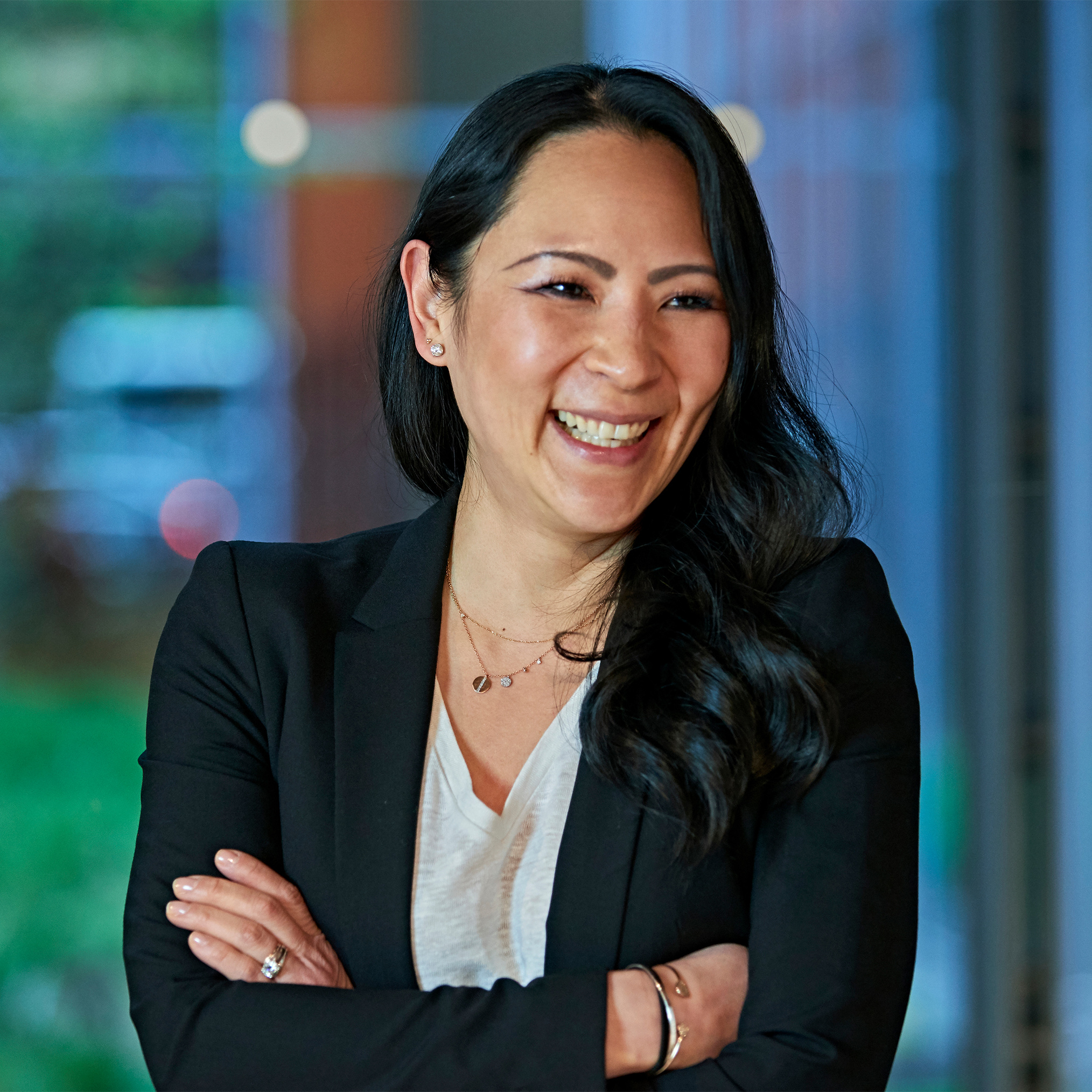

Lina Goujjane, Co-Owner and Sommelier of Kiko and Noury, grew up running around her parents’ restaurant and always assumed she’d take over the family business one day. On this episode of Hospitality On The Rise, Lina shares how one college course changed that plan and set her on a path through openings at The NoMad, Majordomo, and Sushi Noz before launching concepts of her own. She opens up about the realities of leading a team while working the floor alongside them, what it took to earn a two-star review from The New York Times, and how she and her husband, Chef Alex Chang, navigate building a life and a business together.
Note: This episode was recorded in April 2026, prior to the opening of Noury.
Links
Transcript
HOST: ALICE CHENG
Welcome to Hospitality On The Rise, the podcast about the people shaping the hospitality industry and their journeys. I'm your host, Alice Cheng, Founder and CEO of Culinary Agents, hospitality's go-to hiring platform. And I'm here to give you your dose of virtual mentorship.
Here, we'll be sharing the stories, lessons learned, and advice from hospitality leaders who've carved out their own path to success. After all, this industry is where many get their start and go on to do incredible things.
Whether you're a pro, starting out, or just love the hustle, this podcast highlights what makes hospitality extraordinary, the people.
HOST: ALICE CHENG
We're so excited to have Lina Goujjane here with us today. Lina is the Co-Owner and Sommelier at Kiko, which is a restaurant located in New York City, here in lower Manhattan, which is also co-owned with her husband, who's the chef. Lina, welcome. Thank you so much for joining us today.
GUEST: LINA GOUJJANE
Yes, thank you so much for having me. Very excited.
HOST: ALICE CHENG
And I know you have a long history of hospitality within your upbringing. So we'd love to hear. Let's take it back. And how did you get into this industry?
GUEST: LINA GOUJJANE
Yeah, I think it was something I just inherently fell upon. My parents were in the restaurant industry, and so I pretty much grew up within the restaurant environment, and I feel like it's very much ingrained in me. I never considered any other occupancies or careers, and I am just one with restaurants, I would say. Yeah, starting at the age of, like, seven years old, I was running around a restaurant.
HOST: ALICE CHENG
Nice, were you kind of imagining, “One day I'm gonna have my own restaurant. This is what it's gonna be like.”
GUEST: LINA GOUJJANE
You know what, I actually always thought I would end up in “the family business” and never really imagined opening my own restaurant. I only knew my parents' restaurant. I had never worked at any other restaurants. And so it wasn't until about the age of 23 when I took a hospitality course, and the professor was speaking about taking in rent rather than operating a business. And oftentimes there's the landlord side.
And I think, with my parents, we kind of had this light bulb moment that, “Hey, maybe my parents should just get out of the restaurant industry, become landlords.” And I think at that moment, it really allowed me to go explore other hospitality groups and really, I think, unlock my potential.
HOST: ALICE CHENG
Yeah, I love that we get oftentimes, and in this industry in general, there are oftentimes people who have just grown up in the business, whether their parents were in it, or they were working in it, or they owned. And you get exposed to or you know that type of operation or way of being in the industry.
GUEST: LINA GOUJJANE
Yes.
HOST: ALICE CHENG
Then sometimes people recognize early on, they do want to do and they're interested and they start exploring, but sometimes that realization comes much later in life, and kind of the industry pulls them back in. It's interesting, you went that route where it's like, you were exposed to it in one way, and then when you were learning more, you're like, “Oh, this could be something else,” which is great.
GUEST: LINA GOUJJANE
Yeah, and I'm really happy about the direction in which it went. I think, obviously thinking about working with your family seems really stressful. And now I just work with my husband, which I do really enjoy.
HOST: ALICE CHENG
There you go, still family, just different.
GUEST: LINA GOUJJANE
Yeah, exactly.
HOST: ALICE CHENG
So did you go to school for hospitality? Because you kind of knew you wanted to go in that direction.
GUEST: LINA GOUJJANE
No, I did not. So I grew up here in New York City. I always worked in hospitality. I pretty much worked at my family's restaurant all throughout college. And then I always knew I wanted to be in the restaurant industry, but I was working in it. So I didn't really feel I needed to go to a hospitality-driven school. I ended up studying Art History at Hunter College. I did attend some NYU hospitality courses just to kind of offset my curiosity and kind of get a little bit more of a business-oriented training, if you will. But it was, like, an eight week class and once every Saturday, but it did teach me a lot.
HOST: ALICE CHENG
It did the trick.
GUEST: LINA GOUJJANE
It did scratch the itch, and I'm glad I studied art history, but still continued on in the hospitality path.
HOST: ALICE CHENG
Yeah, and I see you worked in many different other operations as well. Can you take me through… was it one of those, like, you're working at your parents’ restaurant for so long, did you have to have a conversation with them, like, “Hey, I'm gonna go work at another restaurant”?
GUEST: LINA GOUJJANE
Not really. I think the time aligned really nicely. My parents decided to get out of the industry, which allowed me to kind of have that excuse to explore other opportunities. And I think in some ways, it freed my parents to be like, “We need to keep operating this restaurant for our family, for our children,” because they as well wanted to get out. So I think it was good timing for everybody.
So from my parents' restaurant, my first job outside of my parents' restaurant was at a very notorious club. And I think I was like, maybe not even 21 at the time, called The Box. And I just really wanted to make money. And I will say it did teach me a lot of tricks and things I still carry today about how to operate in high net value environment, mostly around men, and how to carry yourself around that and stand your ground.
After that, I decided to move to Miami because my parents moved there, and I met with my former bosses, the Foulquiers, who now own Sushi Noz, Noz 17, as well as they reopened a restaurant called Fooqs. So I had worked at the original conception of Fooqs back in 2014, I want to say.
HOST: ALICE CHENG
‘14, yeah. I remember it, yeah.
GUEST: LINA GOUJJANE
Yeah. So I was their first manager. I literally walked in. I met David, the owner, and I was like, “Hey, do you guys need a manager?” on the day I dined there. And I think I started working the next day, and we've retained a really great professional relationship throughout the last 10, 15 years.
After that, I decided to leave Miami at the time. There were no big hospitality groups. There was no COTE. There was no Carbone. I really wanted to expand my palate, my knowledge and focus on wine. So luckily I have a European passport and I staged at a restaurant called Amass, which is no longer open, but former CDC of Noma, kind of coming from that lineage, where it really opened my eyes to the wine industry. From there, moved to Los Angeles and worked for The NoMad Hotel on their opening out there and for David Chang’s Majordomo on both of their wine programs. Then a little bit more after COVID. I'm happy to get into that later, but yeah.
HOST: ALICE CHENG
I remember lots of great, I would say, almost city-defining restaurants of the time and still.
GUEST: LINA GOUJJANE
Totally. Yep.
HOST: ALICE CHENG
Because I remember when we were supporting the opening of The NoMad, I mean, and it was beautiful, it was a new, huge thing…
GUEST: LINA GOUJJANE
It was a massive opening. Yeah.
HOST: ALICE CHENG
It was massive. And actually each one of these major– we talk a little bit about how the industry has evolved over the years and how different cities have evolved as well. And you mentioned at the time, there weren't that many restaurant groups, and now there's like a ton of not only…
GUEST: LINA GOUJJANE
There's so much.
HOST: ALICE CHENG
Yeah, not only native Miami, for example, restaurant groups, but also other restaurant groups that have opened up locations in Miami that are doing really well too.
GUEST: LINA GOUJJANE
Totally, yeah.
HOST: ALICE CHENG
So it just goes to show you is this industry, unlike others, is you can take your skillset and apply it to different cities and different concepts and different restaurants and gather experiences because every city is different, and every restaurant is different as well. So cool. I mean, it sounds like you got a pretty well-rounded kind of set of experiences under your belt. And then you came back to New York.
GUEST: LINA GOUJJANE
Yeah, actually, during COVID, kind of myself and Alex, my husband and co-owner and chef, were working in Los Angeles as we spoke about. And then COVID happened, and we really wanted to work, and we reconnected with my buddy and former boss, David Foulquier, who was closing down Fooqs, bringing in pop-ups and was like, “Hey, do you wanna use this space in Miami?” Miami was very much open during COVID. So it was at both times a little scary to work, but at the same time, I just really wanted to work. So I did a pasta and wine bar pop-up out of the space there just to kind of remain active and creatively inspired. And so I did that.
And then shortly thereafter, moved back to New York City, 2021, had my daughter, and then I think a few months later, the Foulquier brothers reached back out and were like, “Hey, you ready to get back to work? We're looking for somms at Sushi Noz.” And I was like, “All right, let's do it.”
And I was really excited to get back into selling wine and talking about wine and kind of acquaint myself better to Japanese omakase cuisine. I worked there for about two years assisting them after working on the floor as a somm, assisting them with their openings, Fooqs in Miami, Chez Fifi in New York, the reopening of Noz Market. And then shortly thereafter, we opened Kiko. So that was in 2024.
HOST: ALICE CHENG
Wow, well you've been busy.
GUEST: LINA GOUJJANE
It's fine. It's an addiction.
HOST: ALICE CHENG
You know, this industry is not for everyone. But for some, it is like, it's your place.
GUEST: LINA GOUJJANE
Yeah.
HOST: ALICE CHENG
And that's why I always say it's like the center of gravity, kind of pulls you back, because sometimes people are in it and they love it, and then they leave for various reasons. And then after a little while, they realize, “No, actually I need to come back and in some way, shape or form.” Right?
GUEST: LINA GOUJJANE
Totally. Yeah.
HOST: ALICE CHENG
So awesome. Take me through… you had all this different experience, but as we know, working with and for others is never the same as doing your own thing. So when you started to plan for your new project, your own project, what were some of the challenges that you faced early on?
GUEST: LINA GOUJJANE
You know, I would say some of the challenges, I think, were stepping into an ownership role in which I also had to work the floor with hourly staff, managers, and learning to carry myself professionally in a way which always remained a bit more neutral, not emotionally driven. It’s a restaurant, you're opening your own restaurant, it's your baby. You feel so passionate about certain things, but I think always remembering that the folks in the building who are helping you build your dream, some of them might be there for various reasons, maybe for a paycheck to offset their other ambitions. And just kind of always keeping in mind that it's always a push and a pull, and to try to always remain neutral with feedback, and managing people consistently. I think that's the biggest challenge of being an owner.
HOST: ALICE CHENG
Yeah, and that's applicable in many different industries and entrepreneurship in general. And you mentioned quickly that you have a child. So now she's gonna be running around the restaurant and growing up in this environment just like you did.
GUEST: LINA GOUJJANE
Yeah, I probably could have been cliche and said having a kid and trying to open a restaurant is the most challenging part, but I think it would be difficult either way.
HOST: ALICE CHENG
Yeah, I hear that, I hear that. So you've been operating for a while, also 2026 New York Times 2 stars, 2025 Esquire Best New Restaurants in America's list. You've gotten praise from Condé Nast Traveler, et cetera. Congratulations by the way, that's very exciting. You've been operating for a couple of years, and I feel like in hospitality world, those are like dog years. Are you already thinking about what's next, or how do you think about growth?
GUEST: LINA GOUJJANE
So given that I live with my business partner, we share similar goals and passions, and unfortunately we feed each other and always talk about other new projects and try to remain creative. In fact, we're actually already going to be opening another restaurant in June, June 15th, which is less than eight weeks. So yeah, less than eight, six weeks away or so.
So that's already underway, but we definitely do have ambitions to open other projects. I think the best part about my relationship with my husband and business partner is we can have these ambitions to do more, and he feeds my fire, I feed his. So, unfortunate, but like in some ways it's tiring, but in other ways, it's very enriching.
HOST: ALICE CHENG
Yeah, I love that. You're right, it could either be great or not. I think sometimes when I'm on one of my “Ooh!”, my husband brings me back down to earth with very practical, logical, sequential questions. And I'm like, “OK, fine.”
GUEST: LINA GOUJJANE
Yeah, totally. Yeah, yeah.
HOST: ALICE CHENG
But it's different if he was like, “Yeah, yeah!”, feeling it. I think both could be very, very great. Well, can you share a little bit about your project? It's not a secret, right?
GUEST: LINA GOUJJANE
Yeah, sure, of course. No, it's not a secret.
HOST: ALICE CHENG
I mean, you're eight weeks away from opening. It better not be a secret.
GUEST: LINA GOUJJANE
We are a thing less than eight weeks away. The project is called Noury. It's a small 40-seat izakaya wine and sake bar in Soho in Sullivan Street. So more cooked dishes meant to be enjoyed around wine and sake. And I'm really excited to open up a smaller project that feels super intimate, and also in SoHo as a New Yorker, I'm so ecstatic that we kind of get to put our stamp in SoHo. And I do think it's time for SoHo to have a bit of a food revival. So should be quite exciting.
HOST: ALICE CHENG
Yeah, exciting, I just added it on my list. I can't wait to check it out.
GUEST: LINA GOUJJANE
Yeah!
HOST: ALICE CHENG
So with all these projects, and I know sometimes working with family–especially you have a new family, your family–what are some of the ways that you kind of keep yourself on an even keel?
GUEST: LINA GOUJJANE
Great question. Going out to eat a lot. I feel like when I get stressed, I like to like, “Well, I'm just gonna go out to a restaurant at 10 p.m. and sleep less.” But that always helps to kind of bring me back to my center as to why I always love doing this. I definitely value working out. But when I'm stressed, I'm like, “Just do some calm yoga” and just breathing and kind of escaping and quieting my mind as much as possible, even if it's just a few times a week, I would say. And also just trying to be gentle on myself.
HOST: ALICE CHENG
Yeah, we hear oftentimes, yes, don't forget about not just the mental but also the physical. So whichever one is being taken care of more, don't forget about the other. If you're taking care more of your body, don't forget about mental. If you're taking care of your mental more, don't forget about your body.
GUEST: LINA GOUJJANE
Yeah, totally, exactly.
HOST: ALICE CHENG
And the other common thing we hear obviously when there's a partnership in both life and work, you probably both enjoy going out and dining and checking out new places.
GUEST: LINA GOUJJANE
Totally. Yeah, and usually it's around 10 p.m. So we can kind of sneak into the hot spots to get a first look or preview because it's pretty late at that point. So yeah, it's always exciting.
HOST: ALICE CHENG
Yeah. And I would imagine that's also what keeps you inspired because we always try to ask about both.
GUEST: LINA GOUJJANE
Yeah, 100%.
HOST: ALICE CHENG
But I'm like, oftentimes the answer is like, what's keeping you on an even keel is inspiring you also for the next thing.
GUEST: LINA GOUJJANE
Yeah, I'll say also anytime I get to meet someone in the restaurant industry, especially someone who's really forged their path in New York. And if I get to meet that chef or that restaurateur, I just get super fangirly. I'm like, damn, they really did the thing, they're OG. And that really inspires me.
HOST: ALICE CHENG
Yeah and that’s something that–I don't want to say is underrated, but when you look at how the industry has evolved over time and just how things have evolved as you're opening up your second spot, but you were also exposed to it in various ways. I think there are certain things that you can appreciate the way things used to be done and the way things need to be done these days because guests have changed, tools and technology have changed, et cetera.
Can you think of one or two things that was something that is really different now with opening your new restaurant, that when you were working in restaurants back in the day wasn't even a thought?
GUEST: LINA GOUJJANE
I will say one of my youngest memories of being in the restaurant industry or growing up in the restaurant industry is oftentimes I'd have to hang out at the restaurant if my parents were working, or they wanted to be there in the evening and I'd hang out in the coat check room. And I just remember employees were smoking in there because guests were still smoking in dining rooms. So that's definitely changed. But that's one funny thing I always like to remember that, wow, it's been a minute.
Something else that has changed, I would say is definitely technology for better or for worse. I think there's some amazing tools that as a restaurateur and someone who also works the floor have really helped us out. Sometimes I see technology used in a little bit more of a flashy way, which I don't love as much, but I think if you can use technology in a subtle way where it doesn't really… the guest has no idea that you're using it, I think it's great.
HOST: ALICE CHENG
No, absolutely. I mean, it's a tool that at the end of the day, especially with rising costs and just challenges in general that restaurateurs are just facing more and more of. It's like, how do you use these technology tools to do kind of the operational or the more–I don’t want to say “low level”, but operationalize things, make things more efficient, help you gather more information that you can utilize so you can focus on the guest, right?
GUEST: LINA GOUJJANE
Yeah. Totally. Exactly.
HOST: ALICE CHENG
So I think we're gonna see a lot more of that too, probably.
GUEST: LINA GOUJJANE
Yeah, for sure.
HOST: ALICE CHENG
And I'd love to get your take on–as you're also opening your second place and been operating your own for a while–are you seeing any trends or differences in how you're approaching or selecting leadership or people to move up the ranks or when you're hiring?
GUEST: LINA GOUJJANE
Trends in terms of leadership... I don't know if it's a trend, but it's something that I'm really big on is hiring or promoting from within. It might take a little bit more time on the front end to train. But if you find that person or that key individual who gets it from the start, maybe they started as a server or a back server, if you see that spark in them and they pick things up quickly, train them, get them where they can be because you might be able to unleash someone's potential without them maybe knowing it. Or maybe just being the person that gives them that boost. I think it's really important to build a great team around you. For me, that's a trend that I want to try to keep following. I think it's important.
HOST: ALICE CHENG
Yeah, that's great. And you're right. I don't know if trend’s the word. We have seen the overall evolution of employers in general, right? For, obviously, all the external pressures of turnover and how this industry is in general, both with how people are looking to, when they're seeking people to bring onto the team, like certain characteristics or certain drives, certain dedication, et cetera. But then once you have them, identifying the ones that have the qualities that you're looking for that you know can either be wildly successful within your own organization or in hospitality in general, right? And nurturing that. As you mentioned, one of the best things about this industry is that it is for, it's not for everyone, but it is for a lot of people.
GUEST: LINA GOUJJANE
Yes.
HOST: ALICE CHENG
And you could be in it because it's the thing that you're doing for now because you're pursuing other things, right? Because of the flexibility. It could be the temporary thing or it could be the career. And now more than ever, more people are looking at it as a career option, which is really great. And still evolving. I think there's lots of different things that need to come together for it to continue to be a great option, but it's very promising.
GUEST: LINA GOUJJANE
Yeah, I think so too.
HOST: ALICE CHENG
Well, on that note, we're going to move to quickfire. What advice would you tell your younger self?
GUEST: LINA GOUJJANE
Take it slow.
HOST: ALICE CHENG
It's so funny, so many people say that. Like, be patient, take it slow. What's your advice for someone struggling in the industry?
GUEST: LINA GOUJJANE
Travel if you can afford it. If you can't, watch an inspiring documentary, maybe you'll get inspired by someone else that came before you.
HOST: ALICE CHENG
What's your advice for fellow hospitality leaders?
GUEST: LINA GOUJJANE
Give people the benefit of the doubt on the first round.
HOST: ALICE CHENG
I love it. On that note, Lina, thank you so much for joining us today. We cannot wait to see this new project come to life.
GUEST: LINA GOUJJANE
Yes, of course. Thank you.
HOST: ALICE CHENG
Congratulations. And hear more about what's coming next.
GUEST: LINA GOUJJANE
Lovely. Well, thank you so much. So great to take part of this today.
HOST: ALICE CHENG
Remember, success looks different for everyone in hospitality. No two paths are the same. If you have a leader or a topic you want to hear about, email [email protected].
Hospitality On The Rise is brought to you by Culinary Agents, connecting top talent with employers since 2012. Whether you’re hiring or looking for your next opportunity, join us at CulinaryAgents.com
For more inspiration, subscribe to Hospitality On The Rise and visit HospitalityCareerPaths.com, a free platform by Culinary Agents.
Thanks for tuning in! Remember to like, follow, and subscribe. And if you loved this episode, share it with someone who could use a little inspiration.


