
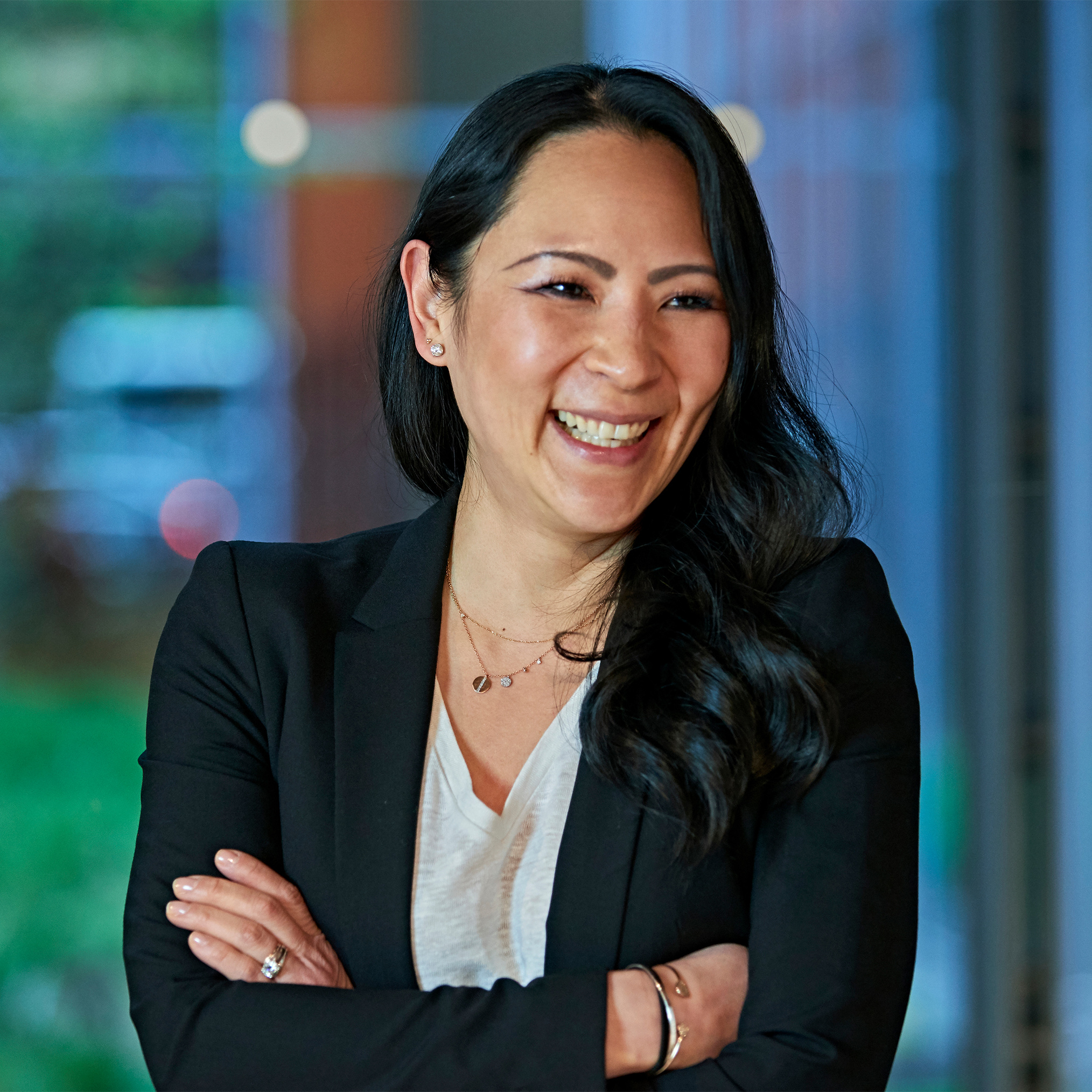
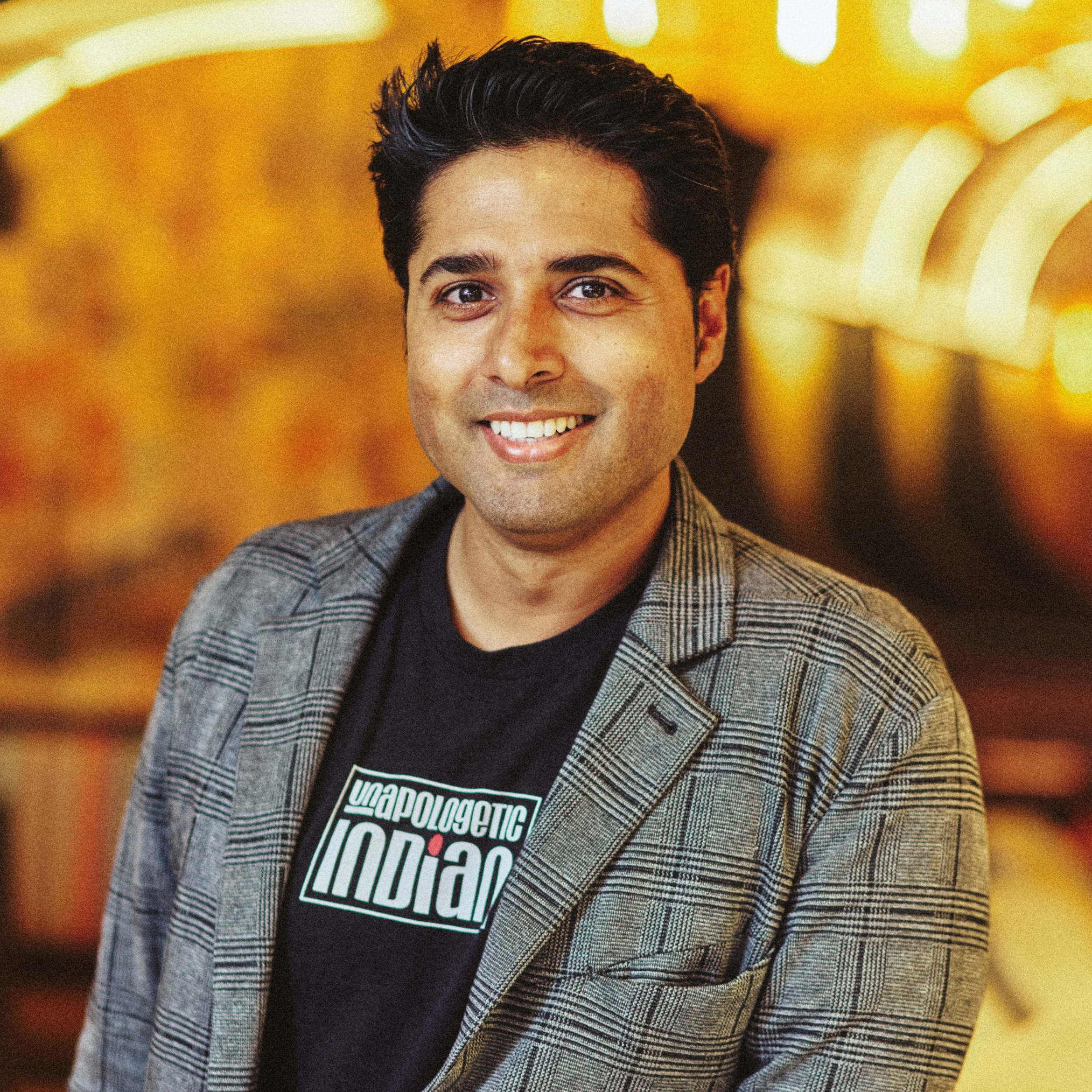
Links
Transcript
HOST: ALICE CHENG
Welcome to Hospitality On The Rise, the podcast about the people shaping the hospitality industry and their journeys. I'm your host, Alice Cheng, Founder and CEO of Culinary Agents, hospitality's go-to hiring platform. And I'm here to give you your dose of virtual mentorship.
Here, we'll be sharing the stories, lessons learned, and advice from hospitality leaders who've carved out their own path to success. After all, this industry is where many get their start and go on to do incredible things.
Whether you're a pro, starting out, or just love the hustle, this podcast highlights what makes hospitality extraordinary, the people.
HOST: ALICE CHENG
I'm so excited to have Roni Mazumdar here with us today. Roni is the Founder and CEO of Unapologetic Foods here based in New York City, which includes amazing award-winning restaurants, including Semma, Dhamaka, Adda, Masalawala & Sons, Kebabwala, Rowdy Rooster, Biryani Bol, Naks, and a new location, which will be open by the time this airs, Sanwits. Roni, thank you so much for joining us today.
GUEST: RONI MAZUMDAR
It's such a pleasure. I'm more excited to see the size of that mic. That's a serious microphone. Oh my God!
HOST: ALICE CHENG
I know. We really try to be legit in our little operation here.
GUEST: RONI MAZUMDAR
This is very legit. I'm like, oh my God, I don't even have headphones on, but here we are. It's good.
HOST: ALICE CHENG
One day I'll show you the studio, and you'll see why I'm laughing. Anyway, so Roni, I'm also very excited for a couple of reasons because every time I've seen you talk on stage or on a panel, you have this energy that is so infectious, and I can only imagine what a pre-shift is like with you. But rolling it back, how did you get started in hospitality?
GUEST: RONI MAZUMDAR
God, I know I was, ha, we want to take a little trip back down to memory lane.
HOST: ALICE CHENG
Take us back. Yes, do it.
GUEST: RONI MAZUMDAR
Yeah, my father was retiring, and I thought I just didn't want my dad to feel old. So I thought it would be fun to open up a small little restaurant for him and make sure that he has that sense of life. It was a whole reason of how I got into this industry. I grew up believing that restaurants were almost his external entities that you go to, you dine at, and food, how you eat, there's a big divide between the two. And growing up in a middle class family, never thought that owning a restaurant was a possibility. Going out itself was a nice treat in many ways.
So it was really around the time when my dad was retiring, more so than not, that a lot of, in many ways, Asian immigrants, et cetera, they go through life with a lot of hurdles. And at some point, it's not fair when they start to feel obsolete. And I knew my father and who he was. I asked the question, what would he have wanted to do? And it was by that time I was working. So I thought in whatever I could gather from my credit cards, let's open up something small.
And that is where the entire idea of why is there a hierarchy in food? Why is it that we look at different cuisines through different lenses? Why is it that from price point to justification of how it is should be, changes from one cuisine to another? Shouldn't all be equal? We all be equal around the dinner table? And that kept on coming to my mind, but I've worked with my father side by side for about six years, learned so much about hospitality from him, but I knew one thing that the next step is that there might be an opportunity to change the way how we are perceived, not just as a cuisine, but as a people behind that cuisine. And that's when I teamed up with Chef Chintan, started building the craziest of ideas together. He's crazier than me, luckily. And here we are talking to each other.
HOST: ALICE CHENG
I love it. I love it. I'm going to dig deeper in there because I feel like there are some pretty fun stories hidden and some gems in there. I particularly like when you were saying “My father was retiring,” and I think I saw somewhere that he was working, working as well in the restaurants.
GUEST: RONI MAZUMDAR
Of course.
HOST: ALICE CHENG
So it's like, “You're gonna retire. Let's find another career for you.” I love that.
GUEST: RONI MAZUMDAR
I don't know if my father knew, like many other probably Asian, South Asian immigrant parents, I don't know if he knew how to really sit still. And that was the whole point. I think it was more of a sense of purpose and being obsolete that was kind of keeping him up at night because all of our lives, we go through thinking you outwork everything in your life. And I think that was a big thing for my father and more so hospitality meant a lot.
I think I've grown up seeing this man meet someone on a train, bring him home, and it's like one in the morning, which is completely normal for India, by the way. Actually, maybe not. Okay, it's not normal for India either. And be like, “Oh my God, look who we met,” and “Let's cook up something.” There's my mom figuring out, like, it is one in the morning. I would jump up, because it's like, “Oh my God, maybe I'll go to school late tomorrow.” But it created this entire opportunity, and we built lifelong friends that way. And it all revolved around food and the dining experience. So I think somewhere he never had a chance to really explore who he really wanted to be. And I thought as a son, maybe there was a way to find that.
HOST: ALICE CHENG
I love that. And you're a career changer. You're a career changer. So throughout leading up to this, you were working in the corporate America, if you will.
GUEST: RONI MAZUMDAR
Yeah, I was a good immigrant boy, alright? I was good. I used to be okay once in a while, but then took a turn for the dark side.
HOST: ALICE CHENG
Yeah, and when you opened your first restaurant, were you like, “What is this? What's going on here?” Because it's one thing to enjoy cooking and hospitality. And then when you shift to opening a restaurant, oftentimes people are like, “Wait, I didn't know what I was getting into.” How was that experience for you?
GUEST: RONI MAZUMDAR
No, I really… I truly enjoyed it myself. I think there was this exhilarating aspect of meeting the guests, changing the way how their evening might be. And there was actually like finding magic. And there was something truly magical in the hospitality space that I never could have seen unless it was that decision for my father that I was making. But I felt exhilarated, but also disappointed somewhere that I wish it was a little bit different.
So rather than running away from the problems, I have a tendency to go head on towards that. So I thought rather than running away and calling out what's working, what's not working, every industry has challenges. What, just because we think it's a tech industry, life's perfect? No, it's not. Let's look at the finance industry. I think the biggest difference is that in many ways in our industry, our margins are much tighter, which makes decision making in the earlier days much more difficult until you have reached a certain level of scalability. And that's what makes the journey that much more difficult for many.
But the reward is equally the same. It's just as exciting, meeting the guests who came in, and there are guests who met each other at the restaurant and eventually continued to come because then they had babies and they would come in with the babies. It was a true neighborhood restaurant. And that's the environment that I was lucky to see my father build. And I've learned a lifetime of hospitality from my dad.
HOST: ALICE CHENG
Yeah, I love that too, because I think early experience is definitely, I would imagine you're also learning throughout this process, right? Because you've gone on to build your empire. And I love how it's called Unapologetic Foods, right? And it makes so much sense, as you're introducing and you unapologetically are like, “This is the cuisine, these are the flavors. Let me introduce this to you in a different way, in my way.” When you were going through your first operation, were you already thinking about building this empire and having different brands within it?
GUEST: RONI MAZUMDAR
Not at all.
HOST: ALICE CHENG
Just living in the moment.
GUEST: RONI MAZUMDAR
You know, okay fine. I shouldn't say not at all. Maybe somewhere in the back of my mind, we all hope for it, right? We all want it. But you don't really know if it will ever become a reality or not. So I think a faint sense of hope was always there. Yes. I wouldn't call anything an empire. I think it's a group of restaurants that we have built up. I would have been so fortunate to see even one restaurant, quote unquote, “succeed”, people showing up. My father and I, we would worry on a Friday night, “Are we going to have enough people to fill the seats?” And those were the early days, right? The fear, the insecurities, the challenges, and just then slowly start to build something and be like, “Wow, there's a line, wait a minute.”
And going from there into that whole experience of where Adda Indian Canteen was in Long Island City is so, so incredibly different. And I think when you get that, it was something else that crossed my mind. It was more so I felt that New York gave us a chance. What am I going to do with this? How am I going to respond to this? It wasn't so much of like, “All right, I have these five concepts that we're gonna build up.” It was a narrative. It was an idea that for once took hold. And I felt anchored. I felt seen in many ways.
I don't think as an immigrant, there was a question of self-worth to see, was it really, is our cuisine in its own way? Not in a different way, but in its own way. Is it really worth being at the same table with everybody else? And I think when you grow up, never seeing that happen, you believe that's the reality. So as a boy, that's what I kept believing, that that was it. So I was hoping that, “Oh my God, one day it would be amazing if we get to be in the same room to have a conversation.” And then another day I figured out you don't need to be in any room, you create the room. But that's part of growing.
HOST: ALICE CHENG
Yeah, and you not only created the room, you changed the conversation completely, I would say, and opened it up into different directions. So when you were opening up, what came first? I feel like you opened several in the same year.
GUEST: RONI MAZUMDAR
But there was still a sequence. It was an absolute madness.
HOST: ALICE CHENG
Yeah, take us through the planning. I mean, you're a very organized, framework-driven person. Take us through the planning. There must have been a strategy here.
GUEST: RONI MAZUMDAR
I wish I could come up with an amazing story that there was. There wasn't. It was actually the strategy was to build– Success was breeding success in many ways. I don't think if that first Adda in Long Island City wasn't what it was, I'm not sure if we would have the guts to say, “Let's create a Dhamaka. Oh my God, now let's go push even harder and create Semma. Now let's go take a completely different turn.”
Each time was a different set of challenges we were picking up, but there was a bigger story. I understood one thing very clearly, is that as a cuisine, there's a hierarchy that we're sitting on. And two, there's an incredible level of misunderstanding or myths that exists around what these grand cuisines of the world are, and I can say that about Chinese, I can say that about Indian. These are some of the oldest, grandest cuisine, yet we have boxed them in in about just ten dishes and said, “I know everything about it.” No, we don't.
I, still to this day, do not claim that I know anything about Indian food, and I'm learning every single day. It's not a singular country. It is a cluster of so many different cultures and flavors coming together, languages. It's like taking all of Europe, shoving it together and saying, “What if this was a country?” How do we justify that? And that's what has happened with something that's Indian cuisine. And I think there was a deep-seated desire to say, “I wish one day people would know the diversity, the dynamic element of what created this cuisine. I wish people would know that there are differences and similarities.” And I think that was a driving force in many ways.
And I think as I looked at that whole conversation of hierarchy, I think I realized there was a hierarchy within our own cuisine itself. And there was a way to break that. And the only way to break that is by exposing the world to it and showcasing an amazing version of each of them. So that's what drove the story. I think the plan was for once, it wasn't an engineering side of the brain. I think engineering side of the brain looks on the business side to optimize things, to grow. Those are different areas. But the instinctual, there's a part of it that is so emotional where we all start. And I think so many of us suppress that very voice that we have within. It's a really powerful voice. I bet that's why you started your business. It's the same reason why we're both talking to each other. And I have so much respect for you, for taking the chances that you have, but that wasn't a calculated, perfect Excel sheet business decision. Something somewhere told you that you should do it. And I think somewhere, that was the voice that was simply following. And I think that's where the magic lies.
HOST: ALICE CHENG
I love that. And you're absolutely right. I mean, and you mentioned if you didn't have that initial success, you don't know if all of these other things would have followed, right? And I think some of it is following your gut instincts. Some of it is meeting the right people and bringing them into your orbit and taking risks, pulling on that creativity and your knowledge and your experience, and then going for it, right? And listening to the audience. You're giving people, they were responding a certain way to what you were putting out there. And that is both motivating, it's also educational, and that can really kind of open up the dialogue in a completely different direction.
GUEST: RONI MAZUMDAR
You know, I think it was different in many ways because it wasn't us trying to sell an idea to anyone. What was different in this case was I think people were attracted to the very notion that here were a couple of guys who felt liberated enough to simply follow their course. And I think too many of us in the world we live in are… sometimes we're all craving to do the same thing. And I think it was something that was much more than food that happened with Unapologetic Foods. I think it was the narrative. I think it was the essence behind why these restaurants were being created. I think it was a moment of feeling liberated for once. And I think as others saw that, they wanted to be a part of that conversation. It wasn't, nobody showed up–I always share this–with a measurement stick and said, “You know, I think this is 10% better than the other place.” Actually, none of us eat food that way. We tend to believe that. That's not true at all. I think it's an emotion that drives us to that conversation.
And food has the power to truly change the world. It has changed my life. It has changed, many ways, our very city and the country. And I think that is the power that will play. You no longer have to go out there so much seeking for the right individual because you're putting out a certain energy that attracts a certain energy as well.
And by the way, no, the first one wasn't such a resounding success. It was our second restaurant. When Chef Chintan and I started working, our first restaurant was a place in the West Village called Rahi, and Rahi was doing well, but it wasn't an Adda. Adda was the first nationally-acclaimed restaurant, Food & Wine’s top 10, New York Times’ top 10. None of that was the case. We were running a good restaurant, and we were okay with that. But I think for the first time in Adda, maybe be it the location, be it being in the outskirts, having the cost structure a little more manageable gave all of us an opportunity to take a chance.
And more so, the credit goes to Chef Chintan in so many ways. I think we're a partner. We have now been working together for a decade. But I think for him to really step in and say, “You know what, Roni,” we had our disagreements. He was the one who said, “No, this is the direction we need to go.” And he had an incredible conviction towards it. And I'm like, I was genuinely scared. I was like, “Dude, if this doesn't pan out…” We really had no foundation for anything. But not only did it pan out, that's when the lines around our restaurant started that hasn't still stopped. And that's where I think the true genesis of what is Unapologetic Foods truly started.
HOST: ALICE CHENG
Yeah, I love that. I'll add off a couple of things that I'm sure our listeners will most likely know, but not to this extent. 2026, Semma was number seven Food & Wine’s top 10 US restaurants. You had number one New York Times’ Best Restaurants in New York. Dhamaka was also included in that list. Semma and Dhamaka, just racking up accolades left and right.
Obviously when we work with businesses, awards and accolades are just one way to recognize work and a restaurant, et cetera, and a good excuse to celebrate. But undeniably, it also increases awareness and visibility and potentially puts more butts in seats. How is that, as you are gaining these accolades and awards and you continue to get them, how is that affecting your thinking around the team, the growth, opportunities that you're providing?
GUEST: RONI MAZUMDAR
I look at two things. I look at my metric of success is if I've been able to transform an evening or a few hours for a guest and if I've been able to impact the lives of the people who believe in the very idea that we believe in.
So I'll give you a perfect example. Tina was a barback. Tina Dolker right now just got promoted to be a hospitality manager across the company. Someone I'm personally so proud to see. And she's an incredible leader. I learned things from her. I deeply trust her and her instincts. But there was an opportunity and growth that happened within the company. So when I look at my biggest reward, what is it that I'm thinking about are examples like that. To say, wow, that's somebody who truly has been able to transform themselves as being a part of this vision. I take no credit for it. She has done it herself. She has contributed to where the company is today.
I take a look at someone like Chef Eric Valdez, who was our employee number one. During COVID, it was a real struggle for all of us. And Eric was a chef de cuisine. And I'll never forget where I started to get to know Eric. He's a man of very few words. And I remember having a conversation where we said, “ You know, Eric, we want you to grow, we want you to see the world out there. And we understand it's difficult sometimes. Why don't we set up an allowance for you to go out there and experience certain restaurants? Give us the check and we'll take care of it. You know, maybe like once or twice a month and that should be fine.” He says, sure. You know, two months go by. I haven't really talked to him about it. I have no idea. I walk into the kitchen, and right under the expo station, there's a mini fridge. So I said, “When did we get this?” He's like, “I got it.” I'm like, “What do you mean you got it?” He's like, “It's the allowance that you gave me. I know we needed a fridge.”
I'm just saying, you can't make it up. You can't fake that. There's a reason why Eric Valdez today is a partner in this company. He's running, I'm so proud of Naks. Today we're opening Sanwitz with him. I mean, this is no longer an employee. This is someone who has that kind of pride and ownership. It's not even–he's of Filipino heritage–it's not that because he was Indian, he understood that. He understood the bigger picture. But was it really about that $250 or was the conversation something different?
Who do we stand next to? I think to me, those are some of the most incredible examples. And that would be technically, if he was employee number one, could be finished in almost a decade. Most people in this industry think it's about titles. It's about jumping from one glorified title to the next and earning the next $5,000. Those are short-term band-aid solutions from a career standpoint. What is transformational is to really build trust and a sense of community, truly believe in each other. That's when the the seismic shifts happen from a career standpoint. And those are some of the examples, from Tina being a hospitality manager overseeing the entire portfolio of restaurants to Eric, 10 years in, is now a partner. I mean, what more could I be proud of?
HOST: ALICE CHENG
Yeah, you gave me little chills.
GUEST: RONI MAZUMDAR
Dude, I got chills at that. I swear to God, this is not somebody who was, if I’d never asked him, I would have never known. Believe me, and those are little moments I will never forget for the rest of my life.
HOST: ALICE CHENG
Yeah, and you know, we hear a lot of the word “culture”. Working for certain restaurants, what culture does that particular work environment have? And these are examples of how culture permeates. It's a frame of thinking. It's this ownership mentality. It's leadership recognizing and… “rewarding” is not the right word, but recognizing and taking action to cultivate that, to cultivate that thinking, that team. It's my long way of saying, wow.
And I know you're not trying to wow me, right? I think that's what's adding to it. This is just genuine. You're just telling me a story, right?
GUEST: RONI MAZUMDAR
That's all.
HOST: ALICE CHENG
And I think a lot of these stories, I'm sure there's more of them if you actually asked within your organization, right? I'm sure you're going to have all these stories. But oftentimes, from a business, a growth, a leadership standpoint, you wanna be around long enough so that these stories make it to the surface, and you want that to continue to fuel. I feel like restaurants and owners and chefs and service folks, you're constantly getting asked from every direction to support, support the community, support. And you're naturally already there kind of contributing just to wherever you physically are, not only creating jobs, but also probably supporting causes and helping other folks do things. And the stories about how the individuals in the organization benefit as well, I like when those get highlighted, and it's one of the reasons why I love these conversations.
GUEST: RONI MAZUMDAR
But we have a responsibility towards each other. By no means are we a perfect company. Nobody is. But if you're not able to listen to the very people who truly believe in you, believe in an idea, then what are we doing all this for? Then it's just a transaction, then it's just a job. And I'm not here to judge anyone. I'm not here to see who's doing it right. All I know is how we want to do it. And all I know is I didn't tell Eric to be the way he was. I didn't ask Tina to be the way she is. They genuinely understood. They brought something to the conversation. And that's what created this entire hierarchy. Do you think I've ever had a conversation with Eric about a raise? Never. Never had it. And that's why he's a partner, because he never defined himself with a certain dollar value. So he went into a completely different category.
And a lot of workers today, a lot of younger people today might not fully understand that. Because we're all afraid a little bit. I don't blame them. You know, they're thinking, “Oh my God, I'm here. I could make five bucks here more, or 10 bucks here more.” That depends on the company. I feel that once you find your home, you should hold onto it and protect it. Only then that home gets better, and you get your own room, you get your own living room and you get to, that's how a mansion is built. In our industry, that's the beginning of a mansion. It's not really just around me, I'm here slogging away. I deserve the least amount of credit in all of this. Like I said, thank Eric's mother for who he has become.
HOST: ALICE CHENG
Yeah, well, I mean, hey, kudos to you and the leadership team for recognizing and taking action, right? Because it is a two way street. You can be in a situation if you're in the wrong organization, “wrong” meaning not what you're looking for as a worker, as an individual, and perhaps not a good fit. But there could be times where, for whatever reason, you're doing your thing, and leadership is not recognizing or not coaching or not mentoring. What I talk about often now is that there's a lot of information out now that wasn't available years ago. And I think for individuals who are looking for jobs, for careers, really want to do something in this industry and work with an organization that aligns with what they want to do and what they believe in, they can do their homework and try to connect with them. So thank you.
GUEST: RONI MAZUMDAR
Can I clarify something for a second? You mentioned mentoring and coaching, and I think my definition and what the conventional wisdom is a little bit different. And I think in many cases, it's important to understand what that means. In the examples that I gave, I have not personally sat there and encouraged them and become that coach to say, “You must do this, and this is the way we're gonna go.” It was done in silence. There's a lot of expectations when we use the word coaching and mentoring, it comes through that “I'm going to walk into this room, this person is going to give me this.” That's not, we're still going back to a transaction.
Nobody, I can motivate you all I want, but you still have to want that. And I think the really critical piece on the flip side, as younger operator, it's really important to acknowledge and understand our business is built by people, like every single business in the world. So if you are not taking the time to acknowledge and recognize who's bringing in what kind of talent–more than talent, I look at integrity over talent any day. I'm okay to work with somebody who might make a few extra mistakes, but to me, integrity is the most important factor. That I can't teach you. That is something that you have to teach yourself and you have to coach yourself on. And so I think when we talk about coaching and mentoring, I want to demystify that it's not something that we have a program, and this is how we said… It's truly, it's a level of respect for each other. And I think it's a two-way street. The person who is an employee sees us in a different light, and we see them in a different light. And both parties have to come together for it to work.
HOST: ALICE CHENG
You're absolutely right. You know, I'm going to segue into the fact that you are very busy. So thank you for making time for this.
GUEST: RONI MAZUMDAR
Please.
HOST: ALICE CHENG
You have a lot of locations. You have a very large team, and you're growing. How do you keep yourself kind of balanced and inspired?
GUEST: RONI MAZUMDAR
God, I used to struggle with this a lot. I used to believe–I still do secretly, I don't tell my wife this. There's a race car driver named Mario Andretti who said that if you're still in control, it means you're not going fast enough. That was a core belief when I started. But no, as you grow a little bit older–I'm in my 40s now–it's a little bit different. I have learned that it's important at times to say no to things, not for the sake of it.
I was taking this past weekend, there was an event that was happening in New York and the organizer of the event personally invited me to say, “Could you please come?” But by that time I already committed that I will take my son for the soccer game that he was supposed to go for. Now, the Asian entrepreneur in me will immediately say, “Hey mom, dad, wife, whoever, somebody, nanny, come on, somebody take the kid. It's okay, I will do it.” And I'm not trying to create a typical father-son conversation. But the question is, I think I lack the ability to say no in the past. And I think the growth that has happened is that today, I was perfectly proud to say, “You know what? That's the night I've actually committed. Let's catch up at a different time.” And it's totally fine.
But I think it roots from a level of insecurity, fear, that one needs to let go of as we grow older, or as we learn the industry. Why would someone be fearful of that? Because they would think that opportunity will never arrive again. That's what we're fearful of, not the opportunity itself. But once you understand that maybe not only that opportunity, but something even better might arrive Because today I was committed to one thing, and I've done it right. Tomorrow I'm going to commit to the next thing, and I'm going to do that right. You can't be everywhere at the exact same time.
And one of the biggest mistakes we as entrepreneurs make is that we end up making the entire journey about ourselves. We become the protagonist. And I think that's a mistake in many ways. I am not the protagonist. The guests are. The team members are. We all are a collective show that we're putting together. And that's the orchestra that one must create. Now, when you are the protagonist, you need to be everywhere. But I'm just as proud to say, here's a team member that attended. There's a few team members who attended that event. I'm equally proud for that. It's not a slight on anybody. But I think as those insecurities slowly fade and you start to grapple with the reality of who you are, it's very important to know that I'm not able to do that well, so therefore don't do it at all. And if you are, commit wholeheartedly and go get it done.
There's a recent charity that we as a group raised a million dollars for. It's for City Harvest, you'll hear about it soon. And I'm so proud of that. But you know what I'm more proud of? We could have walked away saying we raised about $600,000 and not a big deal, but it's something as a group we really committed to. So therefore, instead of just backing away at that 600, we're like,
“How do we push harder to get this number to at least hit a million?” No personal gain in that regard. But I think if whatever you're committing to, can you truly commit? And if you are not, you must have the courage to take a step back. And that's how the time has managed, guess.
HOST: ALICE CHENG
Yeah, I love that. And then when you take a step back, you realize you're creating opportunities for, as you said, team members, other folks to step up and experience or attend or represent.
GUEST: RONI MAZUMDAR
But it's so scary, isn't it?
HOST: ALICE CHENG
Yeah.
GUEST: RONI MAZUMDAR
No, it's so scary when that's what–it's the fear. We all grow up with the idea that nobody will be able to do anything as good as me. It's the worst possible belief system that we have. I believe every single person in this company should be able to do what I do better than me. In each of their respective fields. Chef Chintan is a better chef than me any given day. That's the point. Chef Vijay, Chef Neel. You can look at all the chefs, you can look at all the front of house managers. Every single person in that sense is better than me. And I'm so excited by that idea.
Our fear comes from– I started a little mom and pop shop that was barely 28 seats. I had to do everything. I was doing delivery, I was shattering my phone while I'm on a bike because the delivery guy didn't show up. I had to learn how to be better at something. But that is not the way to build the future of any business.
And I think this is why team members’ resources are that critical, and we shouldn't be insecure about the fact that what if the person is better than me? That's fantastic. That's what you aspire for. And I think in some way it's a choice that you make, therefore you end up, you must be in the dining rooms at all points. I'm very little in the dining room these days because I believe there are wonderful team members who are there who are doing equally if not a better job. But it's a feel-good moment for us as entrepreneurs, isn't it?
HOST: ALICE CHENG
Yeah.
GUEST: RONI MAZUMDAR
I'm shaking the hands, I'm taking a picture with someone. I'm being very dead honest with you. That is exactly what draws us back in. And it's important. But what is more important? If five years later, I'm still the one shaking hands in the dining room, or five years later, I've been able to grow and build an organization that I can really be proud of that can actually help other peoples elevate themselves. I picked the other.
HOST: ALICE CHENG
Yeah, I love it. I mean, I think you just described a leadership journey, right? Like even when you're giving an example of being able to say no and not have the fear around it, that's also a reflection of the stage that your organization is in. Right? And I feel like sometimes with entrepreneurs, like in the beginning, you don't want to say no. ‘Cause you're saying yes to every opportunity because maybe you think you have to, or maybe you don't think that opportunity is going to come up, or you want to do everything you can to get the exposure and get your name out or whatever. So you're just constantly saying yes and trying to do everything, then you reach a point where it's actually a luxury to be able to say no.
GUEST: RONI MAZUMDAR
Sure, and people think saying no is a bad thing. I don't think that's the case at all. I think it's not about saying no. It's about picking your battles, but doing whatever you do…
HOST: ALICE CHENG
Yeah, prioritizing.
GUEST: RONI MAZUMDAR
That's it, and it's whatever you're doing, doing it well. I think it's worse to say yes to 100 things and doing all of them equally bad. I don't think there's any value in that. Instead, pick your 10 things and really do them well where everybody can be proud of.
HOST: ALICE CHENG
I love it. On that note, we're gonna go to quickfire.
GUEST: RONI MAZUMDAR
Oh boy, I thought this was quickfire. Okay, it's quicker. Let's go. All right, I'm ready.
HOST: ALICE CHENG
What advice would you tell your younger self?
GUEST: RONI MAZUMDAR
Pause.
HOST: ALICE CHENG
What's your advice for someone struggling in the industry?
GUEST: RONI MAZUMDAR
Pause. I don't think we spend enough time reflecting upon why that struggle is happening. Each of us know the answers to what is it that we're seeking very much within us if we really want to. The struggle happens because we are somewhere making decisions. We might be spreading the blame to everybody, the world sucks, it's tough. Everything is tough at all points. But pause to understand and reflect as to why that might be happening.
HOST: ALICE CHENG
What's your advice for fellow hospitality leaders?
GUEST: RONI MAZUMDAR
Listen. Don't think you're the smartest guy in the room. Walk in, understand from everybody else, but one thing, despite doing that, don't lose your own voice. It's a really important balance to have. Too many times we are thinking listening to others and creating that democratic feel is what's going to move forward, but it's actually a dance. You must have your own convictions and your own core beliefs while still listening to others and always validating.
Just never fall in love with yourself. I think that's probably the core message is too many times we believe we're the smartest one in the room. I already have the answer. Give another idea a chance. I have too many times, I've failed many times doing that, but I've also succeeded resoundingly. And the answer I gave for Chef Chintan, having his conviction and not really believing in it and believing like, “What if what he's saying is he's right and I might be the one that's wrong?” That little gap can make or break something, and that's what built Unapologetic Foods.
HOST: ALICE CHENG
I love it. On that note, thank you Roni so much for taking time to share a little bit about your career journey, advice. I recently had an incredible meal at Semma, and I particularly–which I'm gonna call out–particularly like that sign when you go to the bathroom, it's like, “Wash dishes, wash hands.” I don't know why, I stopped there and I just started cracking up, and somebody was coming up at that time and just smiled, and I'm like, it's so clever. But those are the little things that create the whole experience. And thank you to your team. And we cannot wait to see what's next.
GUEST: RONI MAZUMDAR
Thank you. It's such a pleasure talking to you. I just really want to say that such a respect for the way you are building this organization. And I don't think you realize you might be representing one of the most important aspects of our entire industry. The biggest challenge we will face and that we are facing today–and it will not be any better–is resources and finding the right people. Any growing organization or not, that is the single biggest factor. And I think you have somehow figured out how to be the very best at it. So thank you.
HOST: ALICE CHENG
Thank you, Roni. Have a great day.
GUEST: RONI MAZUMDAR
Thank you.
HOST: ALICE CHENG
Remember, success looks different for everyone in hospitality. No two paths are the same. If you have a leader or a topic you want to hear about, email [email protected].
Hospitality On The Rise is brought to you by Culinary Agents, connecting top talent with employers since 2012. Whether you’re hiring or looking for your next opportunity, join us at CulinaryAgents.com
For more inspiration, subscribe to Hospitality On The Rise and visit HospitalityCareerPaths.com, a free platform by Culinary Agents.
Thanks for tuning in! Remember to like, follow, and subscribe. And if you loved this episode, share it with someone who could use a little inspiration.


