
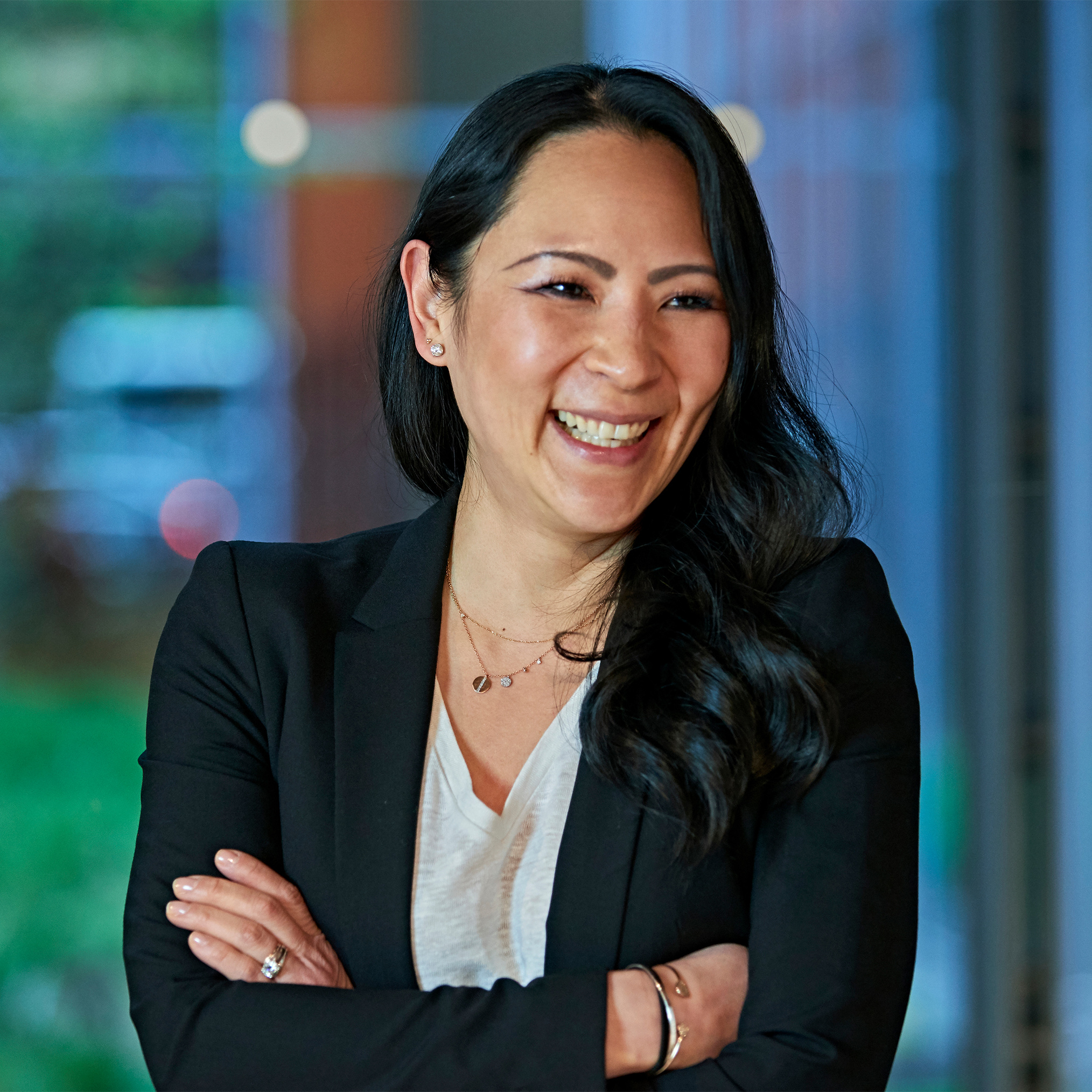
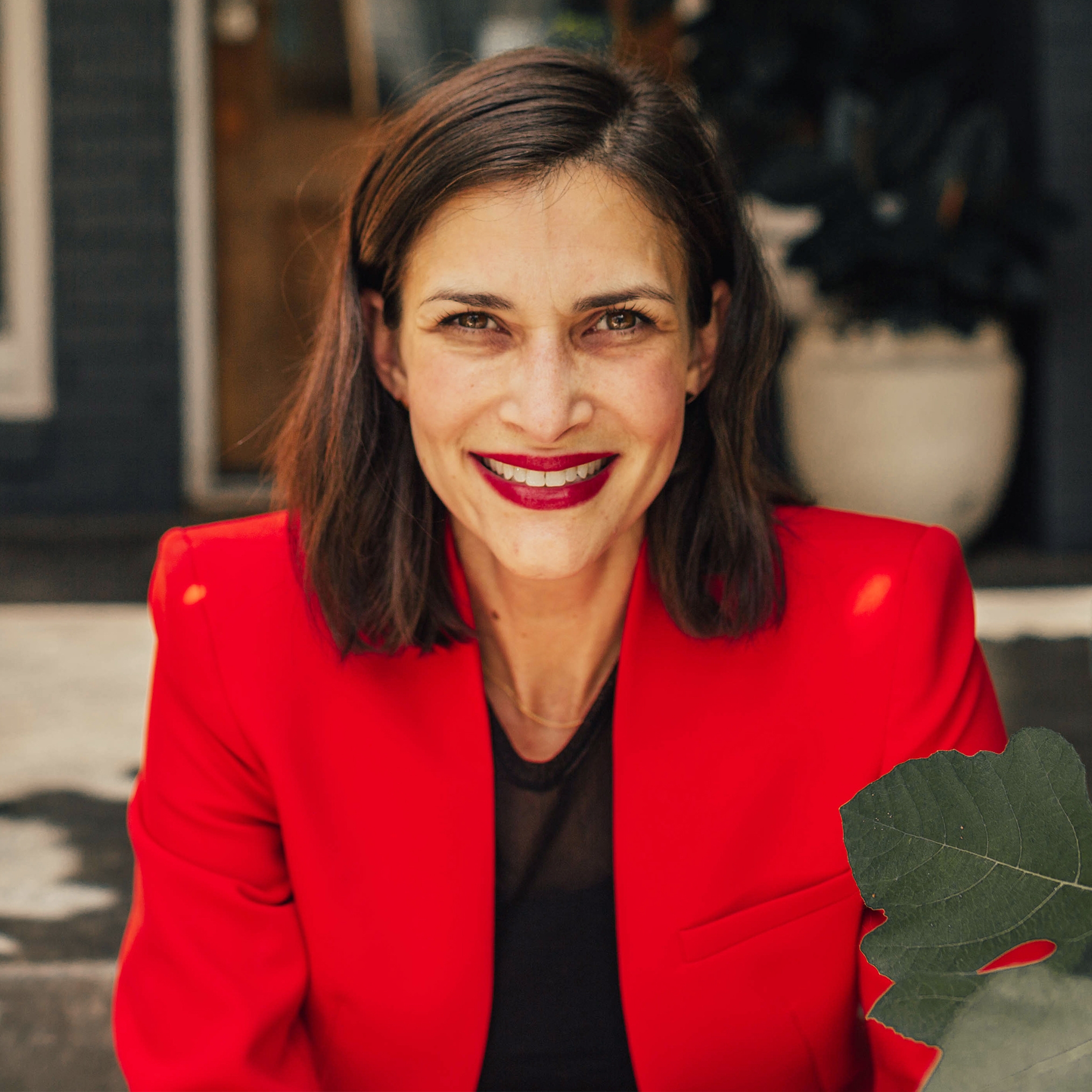
Links
Transcript
HOST: ALICE CHENG
Welcome to Hospitality On The Rise, the podcast about the people shaping the hospitality industry and their journeys. I'm your host, Alice Cheng, Founder and CEO of Culinary Agents, hospitality's go-to hiring platform. And I'm here to give you your dose of virtual mentorship.
Here, we'll be sharing the stories, lessons learned, and advice from hospitality leaders who've carved out their own path to success. After all, this industry is where many get their start and go on to do incredible things.
Whether you're a pro, starting out, or just love the hustle, this podcast highlights what makes hospitality extraordinary, the people.
HOST: ALICE CHENG
I'm so excited to have Jen Hidinger-Kendrick here with us today. Jen is the Founder and Senior Director of Individual Giving at Giving Kitchen, which is a nonprofit providing emergency assistance to food service workers nationwide through financial support and a network of community resources. She is also the 2022–well, Giving Kitchen I should say, not just she, is 2022 one of Fast Company's Brands that Matter. And then in 2019, James Beard Foundation Award, Humanitarian of the Year for Giving Kitchen. Jen, thank you so much for joining us today.
GUEST: JEN HIDINGER-KENDRICK
My sincere pleasure, it is lovely to see you.
HOST: ALICE CHENG
I always love having these sessions with people that I know outside of the pod and outside of work. We've probably… over a decade, right? And it's been so incredible to watch you and your organization grow and evolve over the years. So can't wait to hear about it. But let's rewind a little bit. How did you get into the hospitality industry?
GUEST: JEN HIDINGER-KENDRICK
Oh, I love this. So there's the technical, probably real answer, and then there's the “let's get back into why I'm obsessed with this industry so much” answer, and I'll start there. Funny enough I grew up from Indiana, so I grew up a midwesterner. And in Indiana, I grew up in Indianapolis, so for any race fans out there, it is like the home of the Indianapolis Motor Speedway and the Indy 500.
And as a little girl, I would sell Famous Amos cookies and lemonade to all of the passerbyers who would be walking down West 55th Street, going to the Indy 500 race on Memorial Day weekend, when I was growing up. I remember just that sense of just giddy joy and smiling faces and the pop of energy and just that sheer kind of magnetism for, like, hospitality-meets-entertainment and stuff.
And my mom is Spanish, and so I attribute a lot of that fiery just hospitality-centered energy to my mom, who–We entertained all the time as a family. So I grew up just naturally in this environment of being fulfilled with joy and happy faces and that type of thing. So I would say it started pretty young.
But my true love was when I met my late husband, Ryan Hidinger, and learning that he was a chef, and our coupling, and then really into that kind of F&B industry throughout my adulthood is probably when I kind of honed the love of it there. But I started in food service in college. I had several food service gigs, and I've always just been attracted to it. I've always loved the energy of the food service industry and hospitality.
HOST: ALICE CHENG
Yeah, it's like the center of gravity that just keeps pulling you in.
GUEST: JEN HIDINGER-KENDRICK
Totally.
HOST: ALICE CHENG
If you love it and it's in your blood, your DNA, you can't escape it. Because you went off and did other things before you went all into hospitality.
GUEST: JEN HIDINGER-KENDRICK
Oh yes. Yes. 100%.
HOST: ALICE CHENG
And those things are great. I think it goes both ways. We talk about, from a career path development standpoint, that this is one of those industries where if you start here, you can build on a lot of skills and learn a lot of things that if you eventually want to leave, you still can take those skills with you. They're great skills.
GUEST: JEN HIDINGER-KENDRICK
Totally agree.
HOST: ALICE CHENG
But also, if you have other skills and you love this, what a magical combination to bring other skills and expertise into this industry. And it just continues to enrich, I think, the career opportunities and pathways for everybody. And you went and did other things. Broadcast communication, all these things which, when I was looking at my notes, I was like, all these things make so much sense now. Because I was always so taken aback by how well-spoken you are and how articulate you are. And that's not easy. And communication skills.
GUEST: JEN HIDINGER-KENDRICK
It does take a lot of practice.
HOST: ALICE CHENG
Yeah, I mean, well, yes. And so as I saw you started a restaurant, talk about, let's get into the restaurant stuff before we jump too forward because I'm like, I don't want to do the spoiler alerts. So you went and did some stuff, and then you realized hospitality is the thing. How did it come about with your first restaurant and the pop-ups and everything that you were doing?
GUEST: JEN HIDINGER-KENDRICK
Absolutely, and you know a lot of that comes from, yes, my own choices, but also choices as a married person, to whom I just referred to a couple minutes ago, with my late chef husband, Ryan Hidinger. Our coupling happened in 2000, and then we moved to Atlanta in 2004 after I graduated from Indiana University. And we never anticipated staying in Atlanta for more than a year or two. My late husband, Ryan, had gone to culinary school late ‘90s. Then we met in 2000, and then he came back and was willing to try the city of Atlanta again. At one point he said the city was too big in 1997, ‘98. It “chewed him up and spit him out” was, I think, the phrase that he used forever ago.
And it's so interesting to see where Atlanta is today and what has come from here with the story. But it was really a passion of following a little bit of his dream, a lot of his dream early on. So we moved here in 2004, and again, anticipated staying a year or two, a year or two turned into several years. He ended up finding his kind of home in a kitchen here in Atlanta called Muss & Turners. And after a little while, we started just to kind of, you know, wheels kind of spinning and turning of like, what are we going to do in Atlanta? How is Atlanta going to become our roots, for whatever the future might bring? Or is Atlanta really the place?
And he got into a really bad car accident in 2008 and spent some time away from work to think about what was going to be next for our lives. And that time of healing also proved a time of really thinking about our future. So come January of 2009, we started Prelude to Staplehouse, which was an underground dining club thing that we had started here in Atlanta as a way for the city, the people in this town to get to learn about Ryan's style of cooking and our style of hospitality and as a way to really just get to know people differently because we had our eyes set on starting our own restaurant concept one day.
And so we spent four years hosting these amazing dinners and got some really great, just really built a really beautiful community of people who were highly invested in this concept, in the dream, in us as people and vice versa. That became really, really something kind of special for Atlanta. There was a lot of this underground dining thing happening in Miami and New York and San Francisco, but not much in Atlanta. And so we were among some of the first doing that. And so we developed this kind of following, I guess you could say, community of just people who loved what we were thinking about and joined in for the ride.
So we were developing this dream concept of this restaurant, full service restaurant, maybe does sandwiches, does whatever, but it would be owned by he and I. And one day, he got sick. It was in December of 2012, and I sent him to New York for a day to enjoy New York's food and beverage scene. He came back later that night and ended up missing a few days of work that next week, which was really rare. He was never sick, super healthy, 35 years old. And that few days of missed work led to many sleepless nights. And so we got a recommendation to go see a doctor and to do something, to do an ultrasound, something not super invasive. And that ultrasound ended up showing some abnormalities around his liver. So we were recommended to go to have an MRI at a local hospital here in Atlanta. And that is really kind of the culmination of what everything before and that kind of switch for our family of now everything after.
So we went and had the MRI, and we had a visit with the doctor afterwards. And so we sat next to each other across from an oncologist on December 21st of 2012. And Ryan was given the diagnosis of stage four gallbladder cancer. It had at that point metastasized to his liver and his lungs. The diagnosis was he was given less than a 5% chance at survival and essentially a terminal cancer diagnosis that the oncologist quite literally said, “It's going to be six months. We've never seen anybody live past six months” And his recommendation going home that night was to call family and friends and really start to get our things in line to start to say goodbye to friends and family versus anything else. And that was clearly a catastrophic moment in our lives. The things that we were building as a young couple, this idea of this business that we were creating, everything came crashing down.
Ryan challenged me with calling family and friends with the news that evening. And I did that. I called family. The first two phone calls were family on either side. And then call number three was to Ryan Turner of Muss & Turners. So his employer, his boss, mentor, dear friend, and one of our founders of Giving Kitchen as well, still to this day, was somebody that I could turn to instantaneously. It was about a day and a half later that Ryan Turner and his business partners came to our home, where we had gathered hundreds of people prior with these dinners leading up to Prelude to Staplehouse. And they stated three very specific words to us right there at our dining room table, and they were, “Let us help.” And that is kind of another turning point of the story of when we were able to really throw our walls down, break those walls down and concentrate on our medical journey for Ryan and allow the community to step in and become a resource for us in our time of need.
There was an incredible fundraiser that was put on within four weeks time that we call Team Hidi still to this day. It is Giving Kitchen’s largest signature event of the year. It is our celebration. It is our New Year's. And year number one was just for Ryan. It ended up bringing together nearly a thousand people. Dozens, dozens of Atlanta's most beloved restaurants and bartenders came and did tastings. We had music and a live auction. And quite literally what was supposed to raise $15, $20,000 to help us pay our mortgage for Ryan's final year ended up turning into just this incredible tidal wave of love and compassion that I will never forget. And it changed our lives. It ended up raising nearly $300,000 in one night. And Ryan stood on stage and declared his cancer diagnosis a gift in front of everybody because of what he was seeing happening, bringing people together in community, in unity. I mean, he literally said, “I'm just a cook, and I've already won.” And you can imagine what that turning point did for hearts and minds and just inspiration and motivation. And he led a life of full acceptance and a journey full of grace for others.
That really just is, it's really… I feel very privileged every time I tell the story because of what I see Giving Kitchen doing for dozens of thousands and tens of thousands of people today because he was so selfless and just was okay with the journey he was dealt.
HOST: ALICE CHENG
Yeah, I didn't want to interject at all. And you know, I've heard that story many times and it still gets me every time. So thank you for sharing. I feel like this conversation is slightly different than some of the other episodes we had. I think that that story obviously lays the foundation of Giving Kitchen and what it is and how it's grown and what it will be and continue to evolve. And so it's really incredible. It's very incredible. And I wanna kind of hone in to the fact that amongst all this time, given this and focusing on the health and the medical journey, you're like, we're gonna open a restaurant.
GUEST: JEN HIDINGER-KENDRICK
Why not?
HOST: ALICE CHENG
And then you did. And so can you talk to me a little bit about like, first of all, obviously managing and juggling all these things. I'll highlight also the fact that hospitality industry is so incredible and the people are so incredible that oftentimes they're so focused on helping others that they don't necessarily ask for help or do things to help themselves. But it's so amazing when something brings that to light and then everybody kind of comes in and rallies around it.
GUEST: JEN HIDINGER-KENDRICK
Yeah, I completely agree. There's this resiliency that I wish we didn't always bank on that, but it is just so true.
HOST: ALICE CHENG
Yeah, exactly. It's like, let's just help everyone and solve everyone else's problem, make them feel good and seen and everything and hope for the best, right?
OK, so going back to yes, you decided to open a restaurant, a very successful restaurant, and then also a cocktail bar as well. I was very fortunate to be able to experience all these things. And it was quite incredible. So can you take me through a little bit about still going forth with these pop-ups that you did for many years, which is also incredible in and of itself, and then bringing it to life in an actual restaurant during a really critical time for so many, right?
GUEST: JEN HIDINGER-KENDRICK
Yeah, the model today is a little bit different, but to hone in on this point, which I do think is the story of Giving Kitchen, the origin story of Staplehouse, neither could have existed without each other. I mean, it's like a family.
HOST: ALICE CHENG
Yeah. Yeah, because they were very intertwined in the beginning.
GUEST: JEN HIDINGER-KENDRICK
They were. And so we used, at the very beginning–you know, Giving Kitchen now is in its 13th year. So this was at the very beginning, the idea of having this restaurant turned into–and this is a lot of the story that you've heard, Alice–into a form of medicine for Ryan during his cancer journey. So we concentrated on continuing the progress of building the restaurant and gaining investors and finding a space and all of those things. I rejoined forces with my now-former partners, but in-laws, so Ryan Hidinger's sister and her husband. So we joined forces with them to really set the tone to get this restaurant open. The restaurant finally does open in September of 2015, called Staplehouse. So it is still here in Atlanta. Staplehouse restaurant now kind of turned Staplehouse market, again, 13 years later, a few things have changed, but it's still amazing.
And it, I mean, it was incredible owning or being a part of the management component and operating a restaurant, was my very first. I've been inside restaurants before, but as a server or host or whatever. I've never, it was never at the caliber of A, my late husband or his sister or her husband. But I kind of ran the books, and I was at the host stand every single night for almost six years. And so that's what I did. I was one of those faces that everybody saw. And of course a storyteller about Staplehouse, about Giving Kitchen, and how they were connected.
So when we did first form Staplehouse, it became a for-profit subsidiary of Giving Kitchen, a non-profit 501c3, and the original intent and idea was that the dollars that we would make from the restaurant would be channeled back to the non-profit parent as a sustainable stream of financial income. But because of how everything just shifted and the opportunities that were presented to the nonprofit, it just ran its own legs basically the first couple of years.
So Giving Kitchen was a full functioning nonprofit. Staplehouse was new and amazing for Atlanta. And after six months, we got a nod from the James Beard Awards. So early 2016, we were nominated for Best New Restaurant in America by the James Beard Foundation. Ryan Smith, my former partner and the chef, was nominated for Best Chef: Southeast several times. Later in 2016, we were honored with an incredible recognition from Bon Appétit magazine for Best New Restaurant in the country. Those were the elements that absolutely completely shifted the business for Staplehouse, being this quiet little spot that barely booked reservations to a complete overnight insanity that I'll never forget and always love and appreciate.
HOST: ALICE CHENG
Amazing, amazing. And then as you indicated, as the organizations kind of started growing–I'm not gonna say grow apart, they just started growing individually and in parallel. At what point were you like, “Wow, it's getting bigger than us the way it's currently structured. We need to make a change so that they both can continue to grow as they need to”?
GUEST: JEN HIDINGER-KENDRICK
That's a really, really great question actually, because that's 100% the reason why I ended up leaving my partnership to Ryan and Kara–another Ryan, Ryan Smith and Kara Hidinger to essentially buy the restaurant from the nonprofit, so they could really manage it and do what they wanted to do to for its future, for them, for the business. And it's beautiful and wonderful exactly the way it should be, which allowed me to focus on Giving Kitchen full time.
So I did. I made a very conscious decision of kind of where my pull was at the end of every day, and my pull was this light. This was like this moment of inspiration and what it's doing for others and using what I know from hospitality and what I know from people relations to be able to come on to Giving Kitchen full-time and be a fundraiser and just tell the story on a national platform. For the agency at that point in 2018-2019, Giving Kitchen started out just helping full-service restaurant workers in metro Atlanta, and it took us until 2018 to… So 2013 to 2018, the first five years, to really start helping all food service workers in the state of Georgia. So we came then, then we're an agency that's in the state. And it was slowly after that, which again was kind of the catalyst for me leaving Staplehouse to come here, is that we saw that on the horizon of being able to grow and grow and grow and where my talents and strengths could really be a benefit to the organization.
So that happened. And then ever since, I came on completely full time in 2019 and then in 2020, of course, everybody knows there was a pandemic, which changed everything all over again.
HOST: ALICE CHENG
That little thing that happened.
GUEST: JEN HIDINGER-KENDRICK
We even went from an agency of 11 or 12 people in 2020 to now we're 30, and we're a national agency today. We help food service workers in all 50 states and DC, and we're a pretty well-oiled machine today. Still a lot to learn and grow.
HOST: ALICE CHENG
Still a lot, always more to do, right?
GUEST: JEN HIDINGER-KENDRICK
Always.
HOST: ALICE CHENG
How incredible, and you're super modest, so I'm gonna brag a little bit for you. Recipient of the 2022 Claes Nobel World Betterment Award, recognizing individuals and organizations that provide a valuable service to society and the betterment of the world. I love that. And 2017 Community Hero Award from the Atlanta Braves and Fox Sports South, featured also on Entrepreneur Magazine cover and Atlanta Magazine. Wow.
And you know, I say that, for those of you who are just listening and not watching, I am wearing my Giving Kitchen hat.
GUEST: JEN HIDINGER-KENDRICK
Thank you.
HOST: ALICE CHENG
My very stylish hat that I didn't tell my team I was going to do, so I hope it doesn't mess up any lighting. Sorry guys. But what's incredible is I look back, and we've been, Culinary Agents has been a big supporter of not just you, but what Giving Kitchen stands for and what you're doing, and we love that you allow us to continue to support in many different ways, or creative ways I'll say.
I went to a very early Team Hidi event, and it was amazing as far as the energy, the support, the people that came out, the fundraising, all of the stuff. But it was very different than this most recent one. It was in still a huge big space, which is fine and decorated wonderfully, but it was like a garage. It was just a big warehouse-like situation. And it was years ago. And then most recently this year, Team Hidi was, and last year, I believe, was at the Atlanta Braves Stadium, right? Which is wild.
GUEST: JEN HIDINGER-KENDRICK
Yes. Wild. I mean, really, truly wild. I think about it all the time.
HOST: ALICE CHENG
Wild.
GUEST: JEN HIDINGER-KENDRICK
I mean, we had 800 people at the very first Team Hidi. We raised almost $300,000. That was just for one human. Then the next year, it started benefiting Giving Kitchen full time. And now we were just at Truist Park, home of the Braves, and raised $1.45 million for food service workers in crisis.
HOST: ALICE CHENG
Yeah, I got lost like four times looking for something.
GUEST: JEN HIDINGER-KENDRICK
I loved seeing you.
HOST: ALICE CHENG
I was like, I don't know where I am. I took the wrong turn. I'm like, here we are, right? But there's food and drinks everywhere and I'm having a great time. It really is incredible. And your team is incredible and what you all do and stand for and the grants that you offer and how you're helping folks and listening to those stories. It really is… congratulations. And I know you're just getting started. I know you're just getting started.
GUEST: JEN HIDINGER-KENDRICK
You’re kind, thank you. Yes, we really are, and I thank you for saying that because it is the truth. It is the truth.
HOST: ALICE CHENG
So going on to this portion of show, and you didn't change careers, you just focus, double down on one side of it. And you guys have grown tremendously since then. I think it's a couple of factors, one is your full-time dedication to it. But then also the momentum that you've built with donors, supporters, etc. For those who are listening–because I get this question a lot too because so many people in this industry love to help and they want to help and many of them have dreams of having non-profits of their own or doing something and being able to take the profits from a business and supporting something that's meaningful to them.
What were some of the challenges as you look at different spurts of growth? Like getting certain people onto the board, getting certain fundraisers or whatnot. I might be butchering that, sorry. Can you think of if somebody were to come to you and say, “Wow I really want to do this thing. How can you help me with the early stages from there?”
GUEST: JEN HIDINGER-KENDRICK
I think it's a great question. I think at the end of the day, it is always about...
HOST: ALICE CHENG
I'm, like, summing it up in 30 seconds.
GUEST: JEN HIDINGER-KENDRICK
Right, okay, here we go. But it is all about being fiercely understanding of evolution, and maybe a dirtier way to say it that a lot of people talk about is like, don't be afraid to fail, right? This is going to be of an evolution, like, we–I will say this, this is how I will sum it up in 30 seconds. I will never forget, and I have a story I tell a lot, when my late husband was still alive and we were going in a circle in 2013 of what is Giving Kitchen going to do, who is it going to serve and where and how and all of those things, right?
And it got to Ryan, he was sitting on the couch in my living room, and he said, “All I know is that I want it to be for everyone.” This is not just the 35 year old white male, otherwise, this has to look like the fabric of food service. So however that happens, that's what it's gonna be. And when you have a really clear directive, or in other words, a north star, it doesn't matter what you do, because you're always looking at that one thing, like that is your guiding light. I think for any entrepreneur, if you in your soul know what you want to achieve, all of it in the middle is fine. Great, take a step, try it, don't try it, lean on somebody who has great resources, but if this is gonna be the thing, that is what it's gonna be.
And I have to say, as one of our founders and somebody, again, who gets to share this personal story, it is a privilege to see where Giving Kitchen has gotten to help thousands and thousands of people, for everybody, and to really get better at doing that. So yeah, I think that's one of the things I would say.
HOST: ALICE CHENG
Yeah, no, that's so on point because at the core of it, this is entrepreneurial, right? It's not that different than if you were to start your own company. I mean, you got a lot, you got stakeholders, you have investors, you have supporters, and you have the same channels to get your message out and gain momentum as normal businesses do as well, right?
GUEST: JEN HIDINGER-KENDRICK
100%.
HOST: ALICE CHENG
The financials might look a little different and this, that and the other. But the core of it is if you want to start something, there are some common ways to do it. Fail quickly, ask for help, learn best practices, use the tools available to you, and never lose your focus on your north star.
GUEST: JEN HIDINGER-KENDRICK
Yeah. Yeah, totally.
HOST: ALICE CHENG
So… what's next?
GUEST: JEN HIDINGER-KENDRICK
Oh my goodness. I love it. No, well, actually, I think that's a great question. I'll say this, for Giving Kitchen right now, I do think it's really important for people to hear we as an agency, as an org, as a 501c3, that we have huge plans ahead. We have our 10 year targets. You likely know this Alice, but there's 15.9 million food service workers in the United States.
HOST: ALICE CHENG
I do know that.
GUEST: JEN HIDINGER-KENDRICK
Yep, America's second largest employer is the F&B workers. There is a lot of need out there today, and we know that 1-2% are in crisis right now as we are speaking. And modestly, Giving Kitchen wants to be serving and helping at least 1%. So that is 159,000 food service workers annually in the next 10 years that we want to be able to offer some sort of touch with a resource, financial assistance, whatever it is. So when we back up from there, we did a lot of honing in on making our financial assistance program and our stability network program as equitable as possible for anybody who reaches out for help. I think we did a lot of that work last year for financial assistance, and this year is a big year for stability network. So access to community resource referrals in a very efficient, accessible, and equitable way is a big project that we're working on this year.
And in general, I think, again, just the focus on making sure that everything we do and every encounter that we lead with is always with a compassion and care-forward mentality. We are humans. We are in this really cool business of hospitality. Like, we do really serious work, but we do not take ourselves too seriously. We're a fun agency to hang out with.
HOST: ALICE CHENG
You are.
GUEST: JEN HIDINGER-KENDRICK
It’s keeping all of that in mind. I mean, right? So yeah, that's what we're doing.
HOST: ALICE CHENG
I love it. How do you keep inspired and balanced? Because I know you have a life too.
GUEST: JEN HIDINGER-KENDRICK
I do. I am one of those people, many of my teammates will say, “It's a little different for Jen, but we know, we get it.”
HOST: ALICE CHENG
It is a little different. It's different for everyone.
GUEST: JEN HIDINGER-KENDRICK
Right? I live and breathe this because it is obviously personal blend with professional. But I got remarried, as you know, in 2017. So my husband, John Wayne, is a gift who has a really cool job.
HOST: ALICE CHENG
He's so lovely.
GUEST: JEN HIDINGER-KENDRICK
He's so lovely. We have a six-year-old son who is finishing kindergarten who is just joy and perfection.
HOST: ALICE CHENG
He's so cute. Oh God, I can't believe he's six. I remember when he, wow, oh my goodness.
GUEST: JEN HIDINGER-KENDRICK
I know. Two dogs at home, one new little puppy. There's really fun things. We love to travel. That's how I keep myself grounded, honestly. I get outside and play with my little boy. I adore him and our family, and it's good juice.
HOST: ALICE CHENG
Yeah, I love it. I love it. Goals, life goals in general, finding the passion and purpose and giving that your all and having the nice balance and blend of your personal stuff as well. That's the secret sauce and goal.
GUEST: JEN HIDINGER-KENDRICK
Yeah. Totally. Yeah, I mean, cliches exist for a reason. Like, I don't look at this as work. This is joy of every day. And I think if there's something there, again, for that entrepreneurial spirit, if there's something there that doesn't feel like work, but you're still crushing it, go for it. Keep going. That's the stuff.
HOST: ALICE CHENG
Yeah. I love it. I love it. Right before we get to quickfire here, I'll just kind of add a couple of two cents in general about the organization and all this, all the description and the details that you're talking about supporting all these hundreds of thousands–I mean, amazing goals, and I know you and the team will achieve them–is that this industry is, as you mentioned, one of the largest. It is so wonderful in so many ways. It has its challenges just like every other industry has its challenges. And it has a really unique makeup, which makes organizations like Giving Kitchen very needed and very valuable because not every business–iindependent restaurants or even some larger businesses–can offer health insurance or whatever other insurance that might be needed for unexpected disasters.
And so the fact that this profession continues to evolve, and we always talk about you can learn your skills, you can take those skills, and you can go down any career path that you would like. But having resources and having the confidence that you can take certain risks and you'll still have people to support you and organizations to support you really, really, really helps the career journey, the professional kind of conversation. Because in the past, a lot of people had to make tough decisions that they potentially didn't want to because there weren't resources available to them.
GUEST: JEN HIDINGER-KENDRICK
Right
HOST: ALICE CHENG
So I love that. Thank you. We always pushing the professional conversation, this industry is for everyone. It's not for everyone, but it's also for everyone.
GUEST: JEN HIDINGER-KENDRICK
Right? Exactly. Yes. Love it.
HOST: ALICE CHENG
You could be in here just because you need something, it fills a purpose right now, and you could be here because you love it, and this is your passion and your calling, and you're gonna make a whole career out of it. So I love making sure that more of these organizations are brought to light, and people understand. Because they don't want to ask for help anyway, but if they really understand what it's there for, maybe that'll help the conversation progress.
GUEST: JEN HIDINGER-KENDRICK
For sure, 100% agree with you. It is, I totally agree, it is for everyone. And it doesn't have to mean that you work inside of it because this industry is the backbone of every community. We're all going out to eat. We're all going to our favorite coffee house Monday, Tuesday, Wednesday through Friday. It's a part of every single community, whether you're in it working or not.
HOST: ALICE CHENG
And whether you want to admit it or not.
GUEST: JEN HIDINGER-KENDRICK
Yeah!
HOST: ALICE CHENG
On that note, we're going to go to quickfire. What advice would you tell your younger self?
GUEST: JEN HIDINGER-KENDRICK
Oh gosh, it's gonna be really hard, but you're gonna be okay. You're gonna do it. You'll get through it.
HOST: ALICE CHENG
What's your advice for someone struggling in the industry?
GUEST: JEN HIDINGER-KENDRICK
Oh gosh, it is absolutely okay to not be okay. First and foremost, we've got you. There are so many amazing organizations out there to help support and lift you up, protect you, give you a resource. No questions asked. Working in food service is the coolest thing ever. There's literally just, it is okay to not be okay. You are valued. Dignity matters. We're all in it together.
HOST: ALICE CHENG
What's your advice for fellow hospitality leaders?
GUEST: JEN HIDINGER-KENDRICK
Never let that north star go dim. Let it shine, let it show your purpose through your optimism and your positivity and your storytelling. I think so much of what I find attractive to this industry is just that, is that human connection that people crave so much of, that authentic opportunity to just storytell along the way. People are attracted to that because they're attracted to the human quality and the spirit. So that north star, just never letting it go dim by those case studies.
HOST: ALICE CHENG
I love it. On that note, thank you, Jen, so much for taking time to share your story, to share your growth, share some advice. It's always lovely to see you.
GUEST: JEN HIDINGER-KENDRICK
Thank you so much. I really, really appreciate it, Alice.
HOST: ALICE CHENG
Remember, success looks different for everyone in hospitality. No two paths are the same. If you have a leader or a topic you want to hear about, email [email protected].
Hospitality On The Rise is brought to you by Culinary Agents, connecting top talent with employers since 2012. Whether you’re hiring or looking for your next opportunity, join us at CulinaryAgents.com
For more inspiration, subscribe to Hospitality On The Rise and visit HospitalityCareerPaths.com, a free platform by Culinary Agents.
Thanks for tuning in! Remember to like, follow, and subscribe. And if you loved this episode, share it with someone who could use a little inspiration.


