
Note: This episode was recorded on July 14, 2026.
Links
- Daniel Boulud (Website)
- Ment'or BKB Foundation (Instagram)
- Ment'or BKB Foundation (Website)
- Citymeals on Wheels (Instagram)
- Citymeals on Wheels (Website)
Transcript
HOST: ALICE CHENG
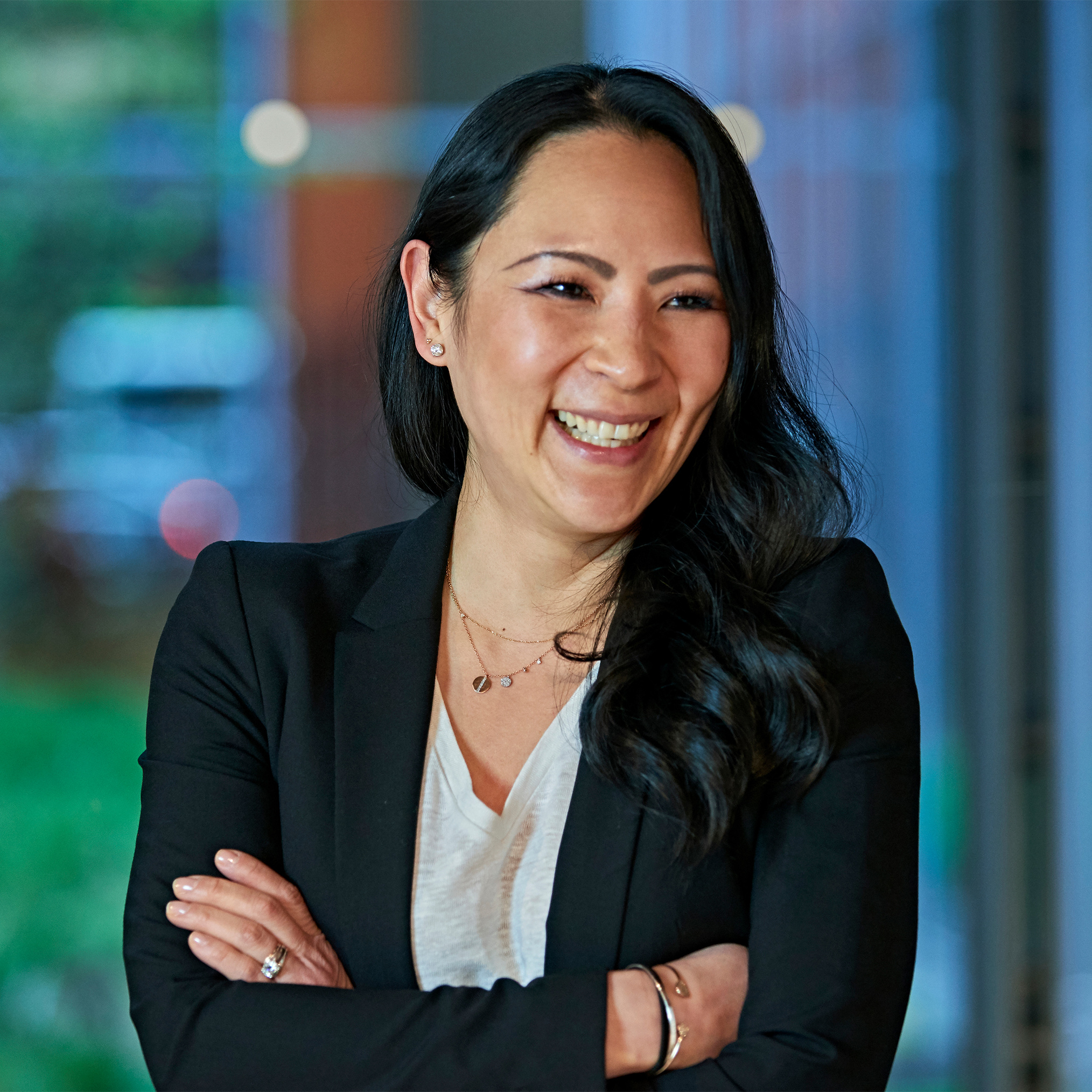
Welcome to Hospitality On The Rise, the podcast about the people shaping the hospitality industry and their journeys. I'm your host, Alice Cheng, Founder and CEO of Culinary Agents, hospitality's go-to hiring platform. And I'm here to give you your dose of virtual mentorship.
Here, we'll be sharing the stories, lessons learned, and advice from hospitality leaders who've carved out their own path to success. After all, this industry is where many get their start and go on to do incredible things.
Whether you're a pro, starting out, or just love the hustle, this podcast highlights what makes hospitality extraordinary, the people.
HOST: ALICE CHENG
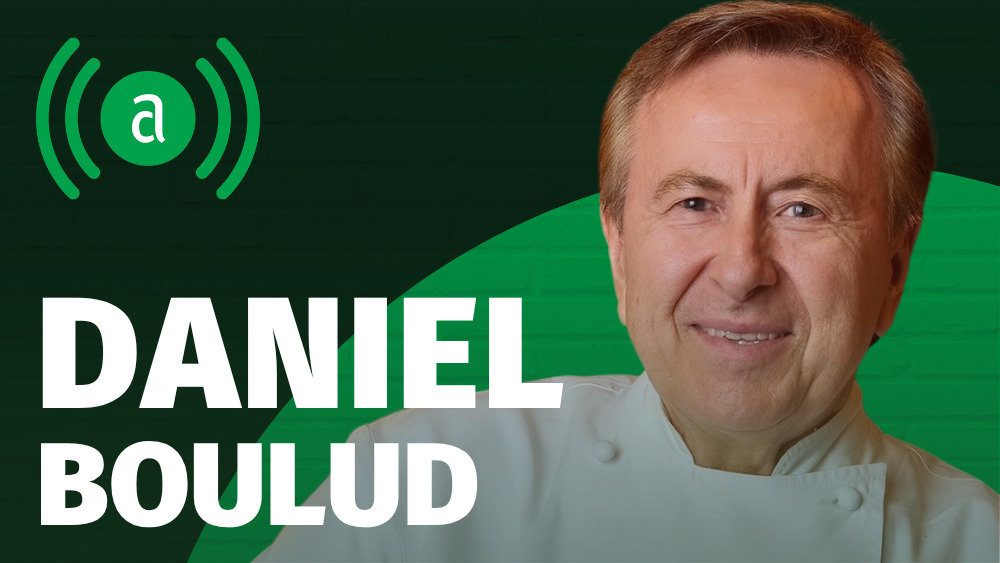
I'm so excited to have Chef Daniel Boulud here with us today. Chef is the restaurateur, an owner, a master of ceremonies, if you will. He's got The Dinex Group here based in New York, but restaurants worldwide.
I'm gonna rattle off some of these things. You have pages and pages of notes of awards and accolades, but we have to call out a couple of highlights here. Chairman of the Board of Directors, Co-Founder of Ment’or BKB Foundation, which we'll hear a little bit about. He's a Board Co-President of Citymeals on Wheels, which is the largest nonprofit meals on wheels program in the country, and Co-Founder of Food1st, nonprofit organization in New York. He also has written several books, one which we're gonna dive into a little bit here, Letters to a Young Chef, which is one of my personal favorites. Its original publication in 2003 and a new edition in 2017, lots of great nuggets in there. Almost done, Chef.
And awards. Wow, let's highlight some of these. Nobleman's Chef of the Year Award, La Liste Innovation Award, World's 50 Best Lifetime Achievement Award. We've got the Culinary Institute of America Chef of the Year Award, James Beard Foundation winner of several: Outstanding Restaurateur, Who's Who of Food And Beverage in America, Outstanding Chef, Best Chefs in America.
And then also, Chef, Restaurant DANIEL, getting Outstanding Restaurant, Outstanding Service. I'm gonna stop there. There's a whole other page here, but… Chef, did I embarrass you? Are you a little red?
GUEST: DANIEL BOULUD
I definitely didn't choose that business just because they were award to me.
HOST: ALICE CHENG
Yes, yes.
GUEST: DANIEL BOULUD
How are you Alice, by the way?
HOST: ALICE CHENG
I'm good. How are you? Thank you so much for joining us today.
GUEST: DANIEL BOULUD
Thank you for having me.
HOST: ALICE CHENG
And we can't wait to hear a little bit about all of the projects going on. But let's roll it back. How did you get into hospitality?
GUEST: DANIEL BOULUD
That was a long time ago, that was in Lyon, my hometown. And I never grew up going out to restaurants with my parents because I think the food at home was fantastic. And we always had a big table, big family. But I had wonderful neighbors that were going out all the time. One of them was a lady that helped me get into the best restaurant in Lyon to see if I was going to like to be a chef, to be a cook there, an apprentice. At 14, I left home to live in Lyon and started in these two-star restaurants. And never look back, from one place to the other, I loved what I was doing there. I was doing a lot of different things as an apprentice, but we were doing, of course, the daily work at the restaurant, but also doing a lot of events within the best location of Lyon or private dinner.
And I always loved that. I loved the versatility and the possibility of being a chef. At the age of 15, I served my first president of France. I never saw notoriety before, and suddenly I'm an actor, and people that have notoriety. So it's glamour to be a cook among the team that is serving the French president.
HOST: ALICE CHENG
Yeah, and at that age.
GUEST: DANIEL BOULUD
Yeah, I don't know. I always liked the atmosphere and the passion and the transmission in the back in the kitchen. And I always also admired the service team. You know, they're always very polished. They didn't get their hands dirty like us in the kitchen, but they were playing such a big role as well. And so I kind of love the business as a whole, not just cooking.
HOST: ALICE CHENG
Yeah, and did you know early on that, because you were exposed to so many different varieties and you said that you could see the passion and joy front of house and back of house, did you envision that you would have your own restaurants one day, let alone a global empire?
GUEST: DANIEL BOULUD
That I didn't know how it could have happened because I didn't have financially the means to succeed to that. But I always was inspired in a way that I wanted to be like them one day. All my mentors, they were all two and three star chefs across France from Georges Blanc, Roger Vergé, Michel Guérard, Paul Bocuse.
And it was a time where there was such an incredible camaraderie between chefs. They were trading chefs from each other. So someone that worked two years here, then they will trade. And one of the chefs will send one of his chefs to replace me somewhere. So there was kind of this constant trading. So they never got short, but they always gave opportunity for someone else to cross-train in the field. I think that was really what I love about that business, is the responsible mentorship that every chef was giving.
HOST: ALICE CHENG
Yeah, and that's kind of woven into the fabric there, right? I always loved that too, with this kind of understanding of–and I'm sure it also addressed short staffing, and you can learn. It's kind of this network of folks, everyone kinda has an understanding of skill level when they're coming in because you're trading. We're gonna talk about that a little later down the road.
So as you're learning it all and you're working with some of the some of the most famous chefs, and you refer to them as mentors as well, I'm sure you're learning kind of different, not just techniques and skills with your hands, but also how people are operating, how they were building their businesses and how they were treating each other as well. When did you decide that you were gonna come build, put your roots down here in New York?
GUEST: DANIEL BOULUD
New York came second. Already after I started my tour de France, then I went to Denmark and I lived twice there for about a year and a half each time. And I really loved the opportunity to be in a foreign country and to be able to show French cuisine, to practice French cuisine and to be part of a team that run one of the best restaurants in Copenhagen at the time.
I was super young, but I was there because Roger Vergé from Moulin de Mougins wanted me to go there and help him. He was consulting, there was no one in the team that worked with him before, so he wanted to make sure that they were... at least I was there to transmit the recipe and to work with the chef there. And I was what, 20 years old at the time, 21? And I felt very responsible and at the same time, very free to have the opportunity to travel through Europe and be in a city that I don't know well the culture. But they are so welcome. They are so appreciative for what you do that it really gives you a lot of motivation.
HOST: ALICE CHENG
Yeah, the hospitality.
GUEST: DANIEL BOULUD
Yeah. And then I went back to France. And then I wanted to go back to Denmark again. You know, there was a love story somewhere in between.
HOST: ALICE CHENG
There always is.
GUEST: DANIEL BOULUD
And then an opportunity came to come to Washington to be a private chef. And I thought, private chef, it sounds like a sabbatical, but to come to make the trip to America, it sounds like a very safe bet. I was betting on the fact that they pay for my ticket, they gave me an apartment, they gave me a car, they gave me a lot of vacation. I didn't have to cook for too many people. I had a very bad salary, lousy salary, but I didn't care. I felt like I'd be coming here legally, and I would be learning about America because I was curious. I’d always been very curious about France outside of France more than. And I was curious about France in France as a young chef because I wanted to do my tour de France in the South, in the Southwest, in the North. So I did that, but then I wanted to expand my journey.
Coming to Washington with all the good vacations I had in this job, because the family would go away for two weeks often, every time there was an opportunity for the family to take vacation or go away. So I will visit California, will visit Florida, I will visit the Midwest. I will go places just for two weeks to discover, like the Northwest as well, San Francisco, Seattle, and all that. So every time I was doing my road trip in America in those two years, that really convinced me to stay here for a while, a little longer after my commitment to Washington as a private chef.
And the only city I wanted to stay was New York. I had the chance to do a stage for one month at La Côte Basque. And La Côte Basque was the school, it was really one of the best and the first American, the school of American chef. That's where Charlie Palmer came out. That's where Todd English came out. That's where all of Waldy Malouf, Frank Crispo and many others that came out of La Côte Basque.
And I spent a month there, and I met all these young American cooks that were coming from the CIA and working there. And I really saw the potential of this passion coming from them and also the commitment, the dedication they had. They were just crazy in a sense of being extremely motivated. And I love the kind of, I love the New York pressure that the restaurant was living. It was kind of a healthy pressure unless the cook was doing drugs, because that was the ‘80s.
HOST: ALICE CHENG
It's a different time.
GUEST: DANIEL BOULUD
The guy next to you was running on cocaine or not. But it was a time that, for me, it kind of gave me the dream to say, well, if I come to New York, I would love to be one of those French restaurateurs one day.
HOST: ALICE CHENG
Yeah, it's incredible because if you look at, you know, you started at a very young age, and you already knew that this was something that you loved and you were drawn in. And that I'm sure gave you the ability to kind of focus a little bit more and map out who you wanted to work with, what experiences you're gonna get so that when an opportunity… that came up, to come to the US, you had already all this experience under your belt. It almost sounds like you kinda finished, at least got to a certain milestone of the experience you wanted in Europe, and it was time to open the next chapter. So I always say for folks out there, if you focus and you do your thing, keep your eyes open for opportunities. And sometimes even if there are certain things that, like you said, the salary wasn't great, but it had other benefits, it's always good to weigh the different options and determine what's gonna be best for you, right? And help you learn and expand.
GUEST: DANIEL BOULUD
Very much. And to really be able to lean on the people you work with. So whoever you are working for or you are associated with in friendship and all that, it's always important to lean on the relationship of others that can help you grow as well. So for example, for me, coming to New York, having done my stage at La Côte Basque after I wanted to come to New York, and there was an opportunity to be the chef at the Westbury Hotel on Madison Avenue. Today is a private club but 69 and Madison was the Westbury, and Jean-Louis Palladin in Washington was working for the same company that the Westbury Hotel, at the Watergate, here at this restaurant.
And so I really, I asked Jean-Louis and I said, “I would like to go to New York. Do you have any opportunity? Do you know anyone that needs someone?” And that's where Jean-Louis put me on the rail with the Westbury and presented me to the management there. I came to do a tasting. They liked me. They had another chef in mind. So we made a joint partnership with my friend, Patrice. And then two years later or a year and a half later, they gave me the Plaza-Athenée Hotel to open. So for me, it was like from one opportunity that I saw there, suddenly they were giving me the bridge to be able to be the chef on my own in the next step. And that was perfect. That was all I needed. It was to get to New York and start to cook.
HOST: ALICE CHENG
Yeah. And the importance of the network, the mentorship. And mentorship, I think, in hospitality, especially in back of house, takes on many different meanings, right? It doesn't necessarily mean somebody that you worked and you cooked alongside and you sat down and had coffee once a week. I actually often say that you are a mentor figure to myself. I've known you for over fourteen years. You're one of the first chefs, first folks to believe in Culinary Agents and support us. And it's oftentimes who you admire, who you learn from through their words, through their actions, and then also the network of people that they have influenced and have helped along the way. But never burn your bridges.
GUEST: DANIEL BOULUD
No, that would not be…
HOST: ALICE CHENG
Do your best when you do have an opportunity, right?
GUEST: DANIEL BOULUD
Absolutely.
HOST: ALICE CHENG
And it's your responsibility, when somebody puts their, offers to help and to and actually helps you, it's your responsibility to carry forward that respect and responsibility as well.
GUEST: DANIEL BOULUD
And that's all along, I mean, once I was in New York, I started to meet some of the most amazing people in the industry. And I started to build a team with chefs coming from Le Cirque, coming from La Caravelle, coming from different restaurants, Lutèce and all of that. So because they did their stay there or La Côte Basque, and then they came to work with me, so you really start quickly to feel like you're a player in this town. You are maybe very junior, you are new, but you start to be a player in the town.
HOST: ALICE CHENG
Yeah.
GUEST: DANIEL BOULUD
And then, of course, the reaction of the guests based on the passion you pour into what you do. And I guess for people to discover a talent is always something unique for both, for the guests to discover a talent in town or for me and the team we built together. But I always leaned also on I am French, and I think if I was Italian I would have leaned on on advice from Italian expert, but the pivotal moment was when I left Plaza-Athenée after opening the hotel and the restaurant was doing fine and all that. But I wanted something different. I wanted something more, more New York and more powerful even in position.
And so the opportunity came to take over Le Cirque. Everybody was thinking, “Oh, he’s not gonna be able to make it.” Because, well, I don't know. I mean, I don't know if they were saying that, but definitely I didn't have the pedigree of a New York chef that had been around, is already been in a couple of institutions and now is taking over an institution that is on fire. The place was so busy. And Alain Sailhac, the chef that was a good friend, but also wanted to kind of get a break. He had seven years of Le Cirque. And again, I was recommended by Paul Bocuse to Sirio Maccioni to become the next chef. And so this recommendation gave confidence for Sirio to make a decision with me.
And then I came to Le Cirque and I met all kinds of people, but one chef that I was very admiring was Pierre Franey. Pierre Franey at the time was not practicing in restaurants anymore, but he was in the New York Times. He was writing columns in the New York Times. And he was to be the encyclopedia of New York City before me, before I came here. And he was the chef at Le Pavillon. So today I have a restaurant called Le Pavillon because of all these stories I heard and all this... It was part of the history of French cooking in New York, Le Pavillon, in the ‘40s, ‘50s, ‘60s, and then it closed in the early ‘70s.
And so Pierre will always tell me story of how was his life as a chef before and what they were doing and all that versus my life at Le Cirque and how I was doing. So it was a form of mentorship for me as well. And he was in East Hampton and come every week to New York because the New York Times was closing the food section on Wednesday to be able to print on Friday. So he had to be in New York every Wednesday, and he will always stop by to say hello. And it's also the case with Jean-Georges at the time after when he came to New York and all that. I think that new generation of chefs coming to New York was kind of like the passage or a new chapter starting.
HOST: ALICE CHENG
Yeah. You definitely all made your remarks in different ways. So you clearly proved–I don't even know if anybody had doubts, but you proved whoever was doubting wrong, right? So Le Cirque, which was a magnificent restaurant and you certainly took it to the next level.
GUEST: DANIEL BOULUD
It was this kitchen behind me. It was exactly in the same place.
HOST: ALICE CHENG
Yep, yep. At what point were you thinking, “Okay, it's time to go out on my own?”
GUEST: DANIEL BOULUD
Because I gave Le Cirque six years–from the beginning it was five years minimum–I told Sirio, I said, “I don't know if I'm going to be my entire life with you, but I'll be with you five years minimum.” And I stayed six years plus. After I saw the term of my contract finishing, I felt that I wanted to go back to Lyon, and I was looking for opportunity in Lyon to open something. And then it didn't work out. I was already too engaged here. I mean, I was doing a newsletter at the time here in New York. I had already such a grasp at the suppliers, at the system here, the media. The only thing I didn't have a grasp on was money because I'm here.
HOST: ALICE CHENG
Yeah.
GUEST: DANIEL BOULUD
I didn't have much money, so I could not open my restaurant but the rest I had a good grasp about it.
HOST: ALICE CHENG
That's funny. That's still a challenge for folks who are looking to open their first restaurant as well.
GUEST: DANIEL BOULUD
This is the scariest thing to do and to get is to raise money. I mean, it's because you take such a responsibility in your life and you take so much, such risk that everybody is generous to give it to you, but they want it back. They don't want to do it for free.
It's terrible to think that way, my family was not in the business. I don't know, I could have maybe stopped business earlier with a very small place and done it differently, but I wanted to go big.
HOST: ALICE CHENG
Go big.
GUEST: DANIEL BOULUD
I wanted to stay at the status I was when I left Le Cirque and I wanted to keep pushing in that level even higher and higher. So Restaurant DANIEL was not a cheap thing to do because I needed three plus million at the time–34 years, 35 years ago almost–three, three and a half million. I met an amazing gentleman called Joel Smilow. He was among one of my ten potential partners, investor. Joel said, “I'd rather be the only one with you than one of them. I can take care of what you need. And if you agree, let's start business.”
HOST: ALICE CHENG
Wow.
GUEST: DANIEL BOULUD
Within one meeting of this gentleman that trusted me more on what he heard about me than what he experienced with me, because I didn't know him personally, and he never really had my cooking before. But his niece told him that he should do it. So you need chance in life, but I think you need to work very hard for the chance to come to you.
HOST: ALICE CHENG
Yeah, back to earlier is that you have to… there's focus there and there's drive. You do a great job in what you're doing and people are watching. People are always watching. Now more than ever, people are watching. And you never know when opportunity or certain people you'll meet will know somebody else. And yeah, I think if you keep putting out that energy and doing your thing and making sure other people understand and see that work ethic, that talent, etc. Things generally do work out. I think so. You have to make it happen. A little bit of luck, a lot of hard work, right?
GUEST: DANIEL BOULUD
Very much. A lot of luck, a lot of hard work.
HOST: ALICE CHENG
So we're gonna fast forward a little bit because the good thing here is that there are so many articles and publications and interviews that people have had with you over the years. So folks who are interested in hearing kind of these substories and guest things can happen. But I'm very interested also in the workers, the talent, the team. You have been incredible at building not just restaurants and guest relations and hospitality, but you've had an impact on so many leaders in front of house and back of house, from over the years, as well as folks who are just in the industry working, right?
For those of you who are not familiar, there's always a really positive and epic story about Chef at an event or going to hang out with the teams. You are an endless ball of energy, I'll say.
GUEST: DANIEL BOULUD
Well I love every talent in the industry, and it doesn't matter where they are from and what cuisine they do or what level it is. I mean, I can go from a three-star restaurant to a barbecue place, and we'll have the same interest in the person and in the team and in what they do as long as there is a sense of passion, a sense of care.
But within our own team, within my own team, of course, we mentor in the life of a chef, you mentor so many people. And some of them are brief by, pass by, and some of them are a lifetime investment. And the more someone invests himself with mentor or with someone, it becomes more of a partnership. And then he becomes the mentor within our bubbles in a way.
So for example, at DANIEL, of course, I've always been the driving mentor, but I think everyone else plays a big role over the last 34 years now that DANIEL is, that every chef that have been driving with me, the restaurant, every sous chef, every pastry chef, they play such an important role with me in training the team. And today, having many restaurants, it really gives me an opportunity to promote. And I see even with DANIEL today, we really have ways to be able to give. In the old days, he was the chef, the sous chef, and then everybody else was kind of cooks, and they would turn around, turn into the kitchen. I think today we have a lot of opportunity to break that down into semi position that start to teach you how to be more responsible, more than just a line cook or a station.
HOST: ALICE CHENG
So for someone who–'cause you have so many, you have thousands of employees, right? How does a young, or I shouldn't say young, how does a cook who is aspiring to learn and has that energy and passion, how do they stand out? Not just in your kitchen, but in general? Like what advice would you give them?
GUEST: DANIEL BOULUD
I mean, it depends. Some of them are very committed, and I think ambition will come later, and that's good. Some of them are very ambitious from the beginning and impatient, and the only thing they need is to basically stamp their books on the path. So I think, I really feel that patience is something very important and commitment to someone. But I'm very proud of seeing, a decade later, two decades later, yesterday I was with Hooni Kim, the chef that just opened again a new restaurant in Queens. It’s incredible. He was a great cook here. He was a great chef de partie, but then our life went apart, and he did these things and had a couple of different businesses. And today still he's really a good role model as a professional and as a citizen. I think that's what's important also, is not only about what you represent for the cooks, but what you represent for your community and how you kind of a part of, you know what you do is part of New York and is part of a bigger picture than just a restaurant.
HOST: ALICE CHENG
Yeah, and I love how you started by saying sometimes people come through your kitchens and spend a little bit of time, and for whatever reason, doesn't have to be negative, it could be very positive, moved on to something else. Sometimes people stay for a really long time. One thing that I've noticed working with your group and knowing you for many years is that those folks who leave on, they definitely have the stamp of the DB, the DB stamp of how they do things, how they see things.
GUEST: DANIEL BOULUD
The DB Drive.
HOST: ALICE CHENG
It really is, and you've been, you do have this… and people, I'll say, both past and current team members of yours will say this. You have this effect, you really do bring this family together, if you will, of your workers. They connect to each other, and they build their own little communities, and it really is something very remarkable to see, and you must be very proud to see that. And even if somebody spends a little bit of time, you've also done a really great job keeping connected with them. I've noticed you check in with people, people check in back at you.
GUEST: DANIEL BOULUD
Very much. Texting with a lot of them all the time. Yesterday again, and even morning, but Helen Nguyen from Saigon Social.
HOST: ALICE CHENG
Yeah, yeah.
GUEST: DANIEL BOULUD
You know, we text a lot, and we try to find ways to see each other sometimes. And so many like that we want to stay connected.
HOST: ALICE CHENG
Yeah. I mean, that speaks to the community you have created, the folks who you have affected and touched. And you have this quote that I'm gonna read here from one of our features, our Hospitality Career Path features: “Relationships you create build a special loyalty that stays with you. They provide a feeling of protection in my life. I truly appreciate the continued trust and loyalty of many of my past employees and want to pass that feeling down to the next generation – the history of the relationship that is linked to trust and loyalty.”
That is such a powerful quote. I think in general, it speaks a lot to this industry and also kind of the way that you lead your leaders and they lead the rest of the teams as well. So I'll say kudos to that first of all.
But how would you say these days, I mean, you have to manage expectations across many, many different categories, right? You're global, you have restaurants in many different countries and continents.
GUEST: DANIEL BOULUD
This morning I was on the Zoom with Hong Kong. So for them it's 10 o'clock or 9:30 at night. It's 9:30 in the morning for us. So it’s, you know, they’re finishing service and we are starting our days. And we spend 45 minutes together with the team, with Aurélie, the chef there, and Mauricio, the director. And we just talk about what happened in the last week and then what's happening in the next month and how we can bring them support. It's exciting to know that it's possible to be able to have a restaurant in Hong Kong, have a team there that you rely on, and be in New York and monitor the relationship from afar.
HOST: ALICE CHENG
Yeah. And you have, like, I think three–at least that we're actively working on–three new openings coming up here.
GUEST: DANIEL BOULUD
Yes, we hope the Brasserie Boulud is coming. So you better find me some good cook.
HOST: ALICE CHENG
I'm working on it night and day.
GUEST: DANIEL BOULUD
So whoever is looking for an opportunity to open a fun French brasserie, we are definitely starting to hire. That's going to be for late August, early September.
HOST: ALICE CHENG
Yeah. We're actively doing California right now.
GUEST: DANIEL BOULUD
Sorry?
HOST: ALICE CHENG
California right now, right? With the Blue Box?
GUEST: DANIEL BOULUD
Yes, Blue Box Café in California in Costa Mesa. So that should be a nice, wonderful little place there. Tiffany has been a great partner here in New York, and so they are redoing the entire store. The team is fantastic also there, and there's a beautiful Blue Box Café, so it should be fun.
HOST: ALICE CHENG
How do you keep yourself balanced and full of this energy that you have? What are the secrets?
GUEST: DANIEL BOULUD
I don't know, but today we're gonna go to Le Gratin. And right now is the World Cup. And right now the French are climbing the ladder. They're in semifinal. And so they're gonna play Spain. And so we’re all gonna go to my office and friends, we're all meeting at Le Gratin to watch TV and have great moment together.
HOST: ALICE CHENG
Yeah.
Well it's important to have fun, right?
GUEST: DANIEL BOULUD
Yeah, exactly. And we try to find always opportunity to celebrate life together in the restaurant business without going overboard also. And then there is family. I live right above the restaurant. And I'm in my office here that is right below where I live. And so there is this vertical integration in my life that helped me keep my sanity, I guess.
HOST: ALICE CHENG
Yeah. I mean, I always say work-life harmony, right? It's not balance. There's no equal parts. As long as you can figure out all the pieces that fit together and it works, then it works.
GUEST: DANIEL BOULUD
Yeah. Well, there's always more work than free time, but that's always part of the job.
HOST: ALICE CHENG
That's part of the business.
GUEST: DANIEL BOULUD
And that never bothered me for sure. And then I try to escape to the country on weekend, take my son to soccer, do all kinds of things that a father or family do.
HOST: ALICE CHENG
Yeah. I love it.
GUEST: DANIEL BOULUD
It's a balancing act.
HOST: ALICE CHENG
Yes. And you know, I will say I saw an article, I think, I wanna say almost a decade ago, and the the author wrote something that I feel is very true and I've experienced it myself, is keeping up with you is like, you know, is very hard to do, but you somehow gracefully balance it all. And if you are with Chef, you automatically want to help you [Daniel] move along in a room because everybody wants a piece of you.
GUEST: DANIEL BOULUD
Yeah, that's the thing. I haven't, I'm trying to learn to not get stuck always in the same place, but at the same time, I think I love to be with the people in the industry. But it's nice also to have a moment of privacy and where you can exchange with friends or colleagues that we don't have to every two minutes take a picture with someone.
HOST: ALICE CHENG
Yeah. And I will say as one of the last things before we move to quickfire here is, you know, we've had a lot of leaders on our podcast here over the past year and who have worked with you at one of your restaurants or directly with you. And all of them consistently say one of your superpowers is you have this ability to focus, so when you're talking to somebody, you make them feel like they are the only person you're talking to. And I feel like in general with leaders and what I hear is that's something that is a skill that people continue to try to work on. It's very difficult, especially when you have so many things pulling at you, right?
GUEST: DANIEL BOULUD
No, but I think it's important.
HOST: ALICE CHENG
Yes.
GUEST: DANIEL BOULUD
It's important and we by nature, we're not always in the situation where you can stay focused with the person you're speaking to and all that. So it's important to make extra effort. You're not being too all over the place.
HOST: ALICE CHENG
Yes. And I will say, 'cause I know I mentioned earlier that I was going to dive deeper into your book. You have many books, but Letters to a Young Chef I felt–I actually read it when I was starting Culinary Agents, and I felt that there were so many great little pieces of advice. And then you came out with a new edition. So for those who I alluded to kind of virtual mentorship, check out the books. It's got a lot of nuggets.
GUEST: DANIEL BOULUD
Yes, absolutely. I think it's timeless. Voila.
HOST: ALICE CHENG
Oh, there it is. New edition. But it's great. Amongst all of the cookbooks, you have basically your letters to young chefs, at pieces of advice, experiences, stories, is great. I think it's definitely a great read for folks who are interested in this industry.
GUEST: DANIEL BOULUD
Very much. I mean, and it's not the solution to everything, but it's definitely the opportunity to understand from my point of view what I feel one can succeed by being committed, disciplined, passionate, invested. It takes a lot to succeed, and I have my own journey and it's sort of my own view on that. But today, I think there’s many of my colleagues that also have done incredible things. To me, they are an inspiration to me as much as I'm an inspiration to them. And that's what I love, is that every level of our industry, I think we really keep inspiring each other with what we do. I mean, I always love to see what Jean-Georges is doing, what Thomas Keller is doing, what their new project and things, because I feel I am aligned in generation with them. We have achieved a lot, all of us, but we still keep wanting to achieve more.
HOST: ALICE CHENG
Yeah. The drive doesn't end. I love it.
GUEST: DANIEL BOULUD
And that's why the next generation is the same. They have to feel aligned. They have to feel aligned with their generation and make sure that there is a great relationship. It's important. You cannot be solo in this business. It's too hard and too demanding. So you got to have fun with friends that keep inspiring you.
HOST: ALICE CHENG
Yep. On that note, we're gonna go to quickfire. What advice would you tell your younger self?
GUEST: DANIEL BOULUD
To just do it the same way. But I don't know, what should I say to myself? Just be yourself always. That's the most important. Be honest, stay ambitious, and keep loving what you do. That'll get you somewhere, it don't matter what it is.
HOST: ALICE CHENG
What's your advice for someone struggling in the industry?
GUEST: DANIEL BOULUD
Maybe to see the opportunity they are in within the industry that are maybe not challenging them. Because I understand for some people that they may be in the wrong direction. And they are looking in the wrong direction. And for me today, we see the explosion of the food world. It don't matter. It don't have to be fine dining restaurant. It don't have to be casual restaurant. It can be… I see the prepared food world today is much less stressful, and it's as interesting in the future of that. Health is something very important too. So before quitting, look at what is there that can keep you very interested, very happy and motivated and not be exactly where you are and what is stressing you. It's tough to figure it out what's perfect for you.
HOST: ALICE CHENG
Yeah. I would say now more than ever, there are different–and one of the reasons why we do these career path highlights–is there's different ways you can take your skills and your learnings and apply it to other parts of the industry. In the past, those paths might not have been as obvious. So now we have examples of people who have done that. So great advice.
What's your advice for fellow hospitality leaders?
GUEST: DANIEL BOULUD
My advice is to continue to inspire me and especially the young ones. I mean, I see, for example, one of my alumni is Gavin Kaysen… Travis Swikard in San Diego, or Gavin Kaysen in Minneapolis, or also Bludorn in Houston, Aaron Bludorn, and they are really amazing inspirations. I know that they are inspired by their path with me, but I am also proud and inspired by their growth. So it's nice to see that. You know, they base that exchange. To me, a colleague might not always be of the same generation, but definitely there is a certain connection with it.
And then there is the giant of our world of hospitality, like Danny Meyer, that we all admire because he is as interested about fine dining, casual dining, even fast casual, and be very successful with it. I think it's fascinating.
HOST: ALICE CHENG
Yeah, I love that. Find inspiration from every direction, right? Feed it back into the industry and lift it up.
GUEST: DANIEL BOULUD
Yeah, at the end, it's all about hospitality.
HOST: ALICE CHENG
Yeah. Well on that note, Chef Daniel, thank you so much for spending time with me. I know you're very, very busy.
GUEST: DANIEL BOULUD
Thank you Alice.
HOST: ALICE CHENG
Happy Bastille Day as well. That's today, right? You can celebrate at any of your restaurants, right?
GUEST: DANIEL BOULUD
That's right.
HOST: ALICE CHENG
Look forward to seeing you soon. Thank you.
GUEST: DANIEL BOULUD
Thank you very much. And look forward to meet a lot of wonderful chefs out there.
HOST: ALICE CHENG
Yes. Coming your way.
GUEST: DANIEL BOULUD
Absolutely.
HOST: ALICE CHENG
Remember, success looks different for everyone in hospitality. No two paths are the same. If you have a leader or a topic you want to hear about, email [email protected].
Hospitality On The Rise is brought to you by Culinary Agents, connecting top talent with employers since 2012. Whether you’re hiring or looking for your next opportunity, join us at CulinaryAgents.com
For more inspiration, subscribe to Hospitality On The Rise and visit HospitalityCareerPaths.com, a free platform by Culinary Agents.
Thanks for tuning in! Remember to like, follow, and subscribe. And if you loved this episode, share it with someone who could use a little inspiration.


